
Choosing the best Arena 4 deck starts with a defense your card levels can support. Start Arena 4 with Giant Musketeer Fundamentals when its card levels are comparable. Cage redirects the attacker, Mini P.E.K.K.A removes tank health, and Giant can protect the support that survives. Choose Battle Ram Valkyrie Wizard if your splash cards are stronger, or Giant Skeleton Dragons Control for flying splash. Compare those three first, choose one suitable list and learn its defense before spending upgrades across all 30 options.
Current Arena 4 is Spell Valley, beginning at 1,000 trophies. Builder’s Workshop follows at 1,300. Card levels, collection differences and timing affect the best practical choice. These are standard-card recommendations for this stage, with clear roles and tradeoffs rather than a measured win-rate ranking.
Choose your best Arena 4 deck by defensive role
| Starting choice | Avg. | Fit and difficulty |
|---|---|---|
| Giant Musketeer Fundamentals | 3.6 elixir | Clear pull, tank damage and counterpush. Keep Musketeer or Mega Minion available for air instead of spending both behind Giant. |
| Battle Ram Valkyrie Wizard | 3.4 elixir | Strong group control with a smaller attacking commitment. Wizard costs five and cannot replace focused tank damage. |
| Giant Skeleton Dragons Control | 3.6 elixir | Flying splash with separate Archer coverage. Avoid giving a spell both Dragons and the backup shooters. |
The 30 entries are selected configurations built around Giant, Battle Ram or both. They serve different leveled collections and defensive problems; they are not 30 unrelated archetypes or 30 equally easy beginner choices. The final six carry two attackers and require more discipline. Most players should begin with one of the first three.
Use a new unlock only when it improves a job
The current arena card listing places Electro Spirit, Fire Spirit, Skeleton Dragons, Bomb Tower, Inferno Tower and Wizard in Spell Valley. A newly available card is optional when its level is too weak for the interaction you need.
- Electro Spirit: a brief chain interruption that can reach air and ground. Its route matters, so a distant distraction can prevent the reset you intended.
- Fire Spirit: a cheap burst against a useful cluster. After the jump, it leaves no standing defender.
- Skeleton Dragons: flying splash that avoids ground-only contact. Both bodies can still give a spell or ranged splash valuable targets.
- Bomb Tower: ground group control and a pull. It does not shoot air.
- Inferno Tower: ramping damage against high health. Distractions and interruptions can keep it from doing that job.
- Wizard: ranged splash against groups. His cost and single-target speed make him a different choice from Musketeer, rather than a universal replacement.
You do not need Hog Rider, Witch, Baby Dragon or a Legendary for these lists. An account with an unusual reward history may own other cards, but that does not make them requirements for an ordinary Arena 4 starting point.
Find the defensive change you need
Images read left to right across the top row, then the bottom row. The card rows and copy link use the same order. Each suggested replacement is a separate one-card alternative; making both changes also changes the average and the defensive balance.
Three starting choices for Spell Valley
Start with comparable levels and a defense you can explain. These three configurations give different ways to preserve useful support without demanding later-arena cards.
Giant Musketeer Fundamentals
First choice for clear defensive jobs and a patient counterpush.
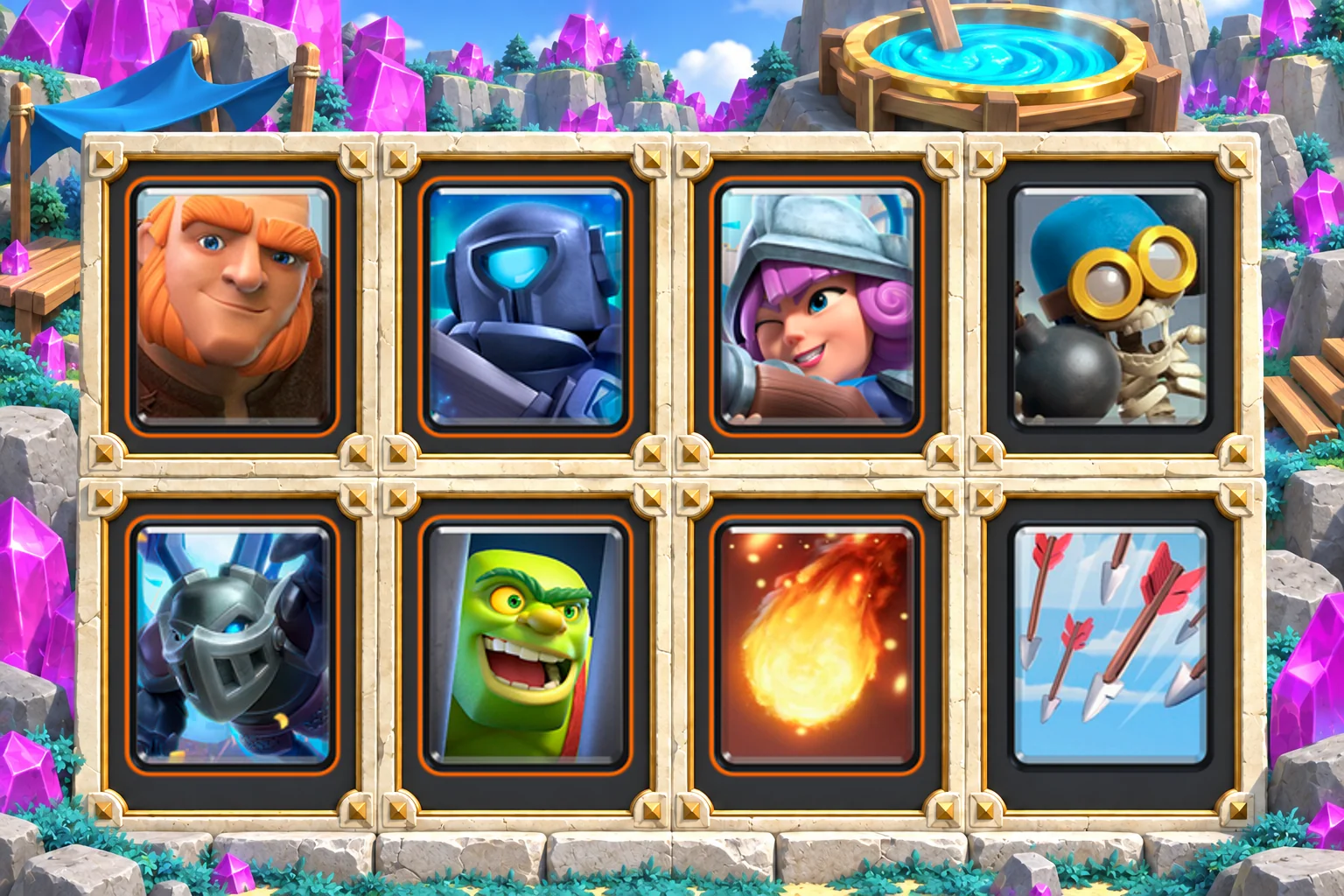
Average elixir: 3.6
Eight cards and their jobs
- Giant (5 elixir): Building-targeting tank placed in front of surviving defenders.
- Mini P.E.K.K.A (4 elixir): Concentrated ground damage against a tank or other high-health attacker.
- Musketeer (4 elixir): Sustained ranged air and ground damage; keep her away from overlapping spell value.
- Bomber (2 elixir): Cheap ground splash behind a tank or defensive distraction; cannot shoot air.
- Mega Minion (3 elixir): Durable single flying attacker for focused air or ground damage.
- Goblin Cage (4 elixir): Pulls building-targeting threats, then releases a ground Brawler counterpush.
- Fireball (4 elixir): Immediate area damage and knockback; spend for useful defense or support value.
- Arrows (3 elixir): Wide air and ground swarm removal; no reset effect.
Give the pull, damage and splash separate jobs
The core sequence is visible: Cage changes the Giant's route, Mini P.E.K.K.A removes health, and Bomber prevents small ground troops from surrounding your damage dealer. Musketeer should shoot from outside the crowded fight. Place Giant in front of useful surviving support only when you still have enough elixir for the next defense.
Opening and double elixir
If you open Musketeer, leave room between her and the tower so a spell cannot cheaply damage both. Watch whether their first answer is a building or a troop before purchasing Giant support. In double elixir, add the card that solves the actual blocker; a second ranged defender often belongs in your hand for the next lane.
Defensive order and matchups
Against Giant: Against an unsupported Giant, start with the pull and damage rather than deploying all four defenders. If a Bomber follows, arrange for Brawler or another suitable body to occupy it before fragile support enters its blast. A clean tank kill is not enough if the ranged troop survives untouched.
Against Battle Ram: Cage must be down early enough to influence the Ram's path. Once the charge breaks, reassess the released Barbarians: Bomber may provide economical cleanup, while Mini P.E.K.K.A is useful when a durable survivor also needs removing. Do not send your damage dealer after distant support while the Barbarians reach the tower.
A decision during the match
Suppose Cage and Mega Minion have just cost seven elixir. Even starting at ten, only three remain before regeneration, so Giant cannot appear immediately. Wait while judging Mega Minion's health and the Brawler's position. If the surviving support will die before the tank can protect it, accept the defense and build the next attack later.
Mistake to avoid: Every surviving troop does not justify a full Giant push.
One-card alternatives and upgrades
- Minions for Mega Minion: More flying bodies, greater removal-spell exposure. New average 3.6 elixir.
- Tombstone for Goblin Cage: Cheaper pull but no Brawler. New average 3.5 elixir.
Upgrade focus: Giant, Musketeer, Mini P.E.K.K.A, Fireball.
Upgrade the cards that make the defensive sequence reliable before maintaining several alternative tanks. Mini P.E.K.K.A needs to finish the health target, and Musketeer needs time to shoot. A Giant upgrade helps the eventual push, but it cannot repair a defense whose damage cards are consistently removed.
Battle Ram Valkyrie Wizard
Starting alternative when Wizard is leveled and ground swarms cause trouble.

Average elixir: 3.4
Eight cards and their jobs
- Battle Ram (4 elixir): Building-targeting charge and surviving Barbarians; punish a committed counter.
- Valkyrie (4 elixir): Ground splash defender for clustered support and swarms; cannot attack air.
- Wizard (5 elixir): Ranged air and ground splash; protect him while another card damages high-health targets.
- Mega Minion (3 elixir): Durable single flying attacker for focused air or ground damage.
- Cannon (3 elixir): Cheap ground-targeting pull; can draw Balloon but cannot shoot it.
- Skeletons (1 elixir): One-elixir ground distraction that buys shots and helps rotate the hand.
- Fireball (4 elixir): Immediate area damage and knockback; spend for useful defense or support value.
- Arrows (3 elixir): Wide air and ground swarm removal; no reset effect.
Use Valkyrie and Wizard on groups, Mega Minion on tanks
Valkyrie and Wizard both punish groups, but they work from different positions. Valkyrie takes ground contact and Wizard shoots behind her; Mega Minion supplies concentrated damage against a durable attacker. This version suits recurring swarm problems, although its five-elixir Wizard makes an unnecessary deployment expensive.
Opening and double elixir
Cannon is a response to a threat, not a reason to spend three at the start. When the opponent waits, you can wait too. Later, a surviving Valkyrie can absorb contact near the Ram's route, but the Ram may move ahead as it charges. Support it only when that changing order still makes sense.
Defensive order and matchups
Against Giant: Let Cannon redirect Giant so Mega Minion gets repeated attacks. Valkyrie's more useful assignment is usually the ground support behind Giant. If Wizard is already firing safely, avoid adding another expensive defender simply because Giant remains alive for a moment; judge whether the current damage can finish it in time.
Against Minions: Wizard can clear the group if he has a protected firing opportunity. Arrows is the direct emergency option when Minions threaten an exposed unit. Mega Minion contributes damage one target at a time, so do not assume its durability gives it the same group-removal job as Wizard.
A decision during the match
Wizard survives on very low health and you have four elixir. Buying Ram to protect him can lose both investments when Fireball reaches the shooter anyway. Let Wizard's remaining shots or the spell he draws be his final value, then retain the Ram for a healthier counterattack.
Mistake to avoid: Treating Wizard splash as a fast heavy-tank killer.
One-card alternatives and upgrades
- Electro Spirit for Skeletons: Chain stun and air contact instead of persistent ground bodies. New average 3.4 elixir.
- Musketeer for Wizard: Cheaper focused damage but less splash. New average 3.3 elixir.
Upgrade focus: Battle Ram, Wizard, Fireball, Cannon.
A useful Wizard level supports the reason you chose this list, but do not ignore Cannon and your focused damage. If splash is already adequate and the cost causes weak hands, the Musketeer alternative saves elixir while changing the job. That is a deliberate trade, not an identical cheaper Wizard.
Giant Skeleton Dragons Control
Air-splash alternative for a collection with strong Skeleton Dragons.

Average elixir: 3.6
Eight cards and their jobs
- Giant (5 elixir): Building-targeting tank placed in front of surviving defenders.
- Mini P.E.K.K.A (4 elixir): Concentrated ground damage against a tank or other high-health attacker.
- Skeleton Dragons (4 elixir): Two flying splash units that cover air and ground groups; protect their fragile bodies.
- Archers (3 elixir): Split-capable air and ground damage; avoid clustering both with another fragile defender.
- Bomber (2 elixir): Cheap ground splash behind a tank or defensive distraction; cannot shoot air.
- Goblin Cage (4 elixir): Pulls building-targeting threats, then releases a ground Brawler counterpush.
- Fireball (4 elixir): Immediate area damage and knockback; spend for useful defense or support value.
- Arrows (3 elixir): Wide air and ground swarm removal; no reset effect.
Keep the flying splash apart from the ranged reserve
Skeleton Dragons attack ground groups from the air, avoiding contact with ground-only defenders. Both bodies can still be caught by one appropriate spell. Archers provide a separate ranged reserve, while Mini P.E.K.K.A performs the high-health ground job that neither splash support should be expected to finish quickly.
Opening and double elixir
Split Archers only when distributing the damage fits the incoming threat. One Archer in each lane is useful coverage, but a large push may require concentrated help. In double elixir, support Giant with the surviving group and keep the other available rather than creating a single expensive spell target.
Defensive order and matchups
Against Battle Ram: Cage changes the charging path before you decide how to remove the Barbarians. Bomber handles their grouping when protected; Mini P.E.K.K.A brings stronger individual hits if the fight contains a durable attacker. Deploying both automatically can leave you short of the ranged defense needed for the next exchange.
Against Musketeer: A Musketeer already aiming at the approaching Dragons can remove their value before they help Giant. Give her another target or wait for a defensive exchange that leaves your support alive. Do not buy Giant after the Dragons have already taken too much damage to contribute.
A decision during the match
Fireball removes the Dragons and your Giant is still available. Before committing five, check whether Archers are in hand and where their next air threat could arrive. If the Archers are also gone, rebuild coverage first. The planned counterpush has changed because its support has changed.
Mistake to avoid: Stacking Archers, Dragons and tower into the same spell area.
One-card alternatives and upgrades
- Musketeer for Archers: Sturdier single shooter at extra cost. New average 3.8 elixir.
- Fire Spirit for Bomber: Cheaper burst but no sustained ground splash. New average 3.5 elixir.
Upgrade focus: Giant, Skeleton Dragons, Mini P.E.K.K.A, Fireball.
Improve Dragons if their splash is the reason this version fits your collection. Keep Mini P.E.K.K.A useful against tanks and avoid treating two modestly leveled Archers as a durable replacement for every ranged job. The Musketeer swap is sturdier and costs more; its extra expense should solve a real failure.
Giant decks with different defensive anchors
Each Giant version changes the defensive anchor or supporting damage. Compare what survives the defense and what must remain in hand before buying the tank.
Giant Wizard Inferno Anchor
For high-health ground attackers when Mini P.E.K.K.A is weak.

Average elixir: 3.5
Eight cards and their jobs
- Giant (5 elixir): Building-targeting tank placed in front of surviving defenders.
- Wizard (5 elixir): Ranged air and ground splash; protect him while another card damages high-health targets.
- Mega Minion (3 elixir): Durable single flying attacker for focused air or ground damage.
- Goblins (2 elixir): Cheap melee damage and surrounds; wait until enemy splash is occupied.
- Skeletons (1 elixir): One-elixir ground distraction that buys shots and helps rotate the hand.
- Inferno Tower (5 elixir): Increasing damage against a focused target; protect it against reset and distractions.
- Fireball (4 elixir): Immediate area damage and knockback; spend for useful defense or support value.
- Arrows (3 elixir): Wide air and ground swarm removal; no reset effect.
Clear the distraction before buying the counterpush
Inferno Tower replaces the direct tank-killer slot with ramping building damage. It needs a target and enough uninterrupted time. Wizard removes groups that would interfere with the defense, while cheap ground bodies buy position. The combination is powerful against health but expensive when used on a small threat.
Opening and double elixir
Keep Inferno until an incoming attacker justifies its cost. An early Wizard needs a real job too, since five elixir spent walking from the back can invite pressure elsewhere. In double elixir, use the resulting Wizard survivor for an attack only after the beam has completed the important defensive work.
Defensive order and matchups
Against Giant: Watch the beam rather than assuming the tank is solved as soon as Inferno appears. If cheap bodies acquire its initial lock before Giant enters, clear them with appropriate splash while preserving the building. Goblins can help around isolated support, but not while an untouched Bomber is covering the entire fight.
Against Battle Ram: A pull can stop the direct charge, yet the released Barbarians still require attention. Cheap bodies may delay their attacks while Wizard fires or the tower helps. Spending Giant immediately after the Ram breaks can leave those ground survivors free to undo the otherwise successful defense.
A decision during the match
A cheap troop reaches Inferno first and takes its initial lock before Giant enters range. You have enough elixir for your own Giant, but the enemy tank is not yet being damaged by the beam. Clear the first target or protect the building so it can acquire Giant next. If no Wizard survives that defense, there may be no counterpush to fund.
Mistake to avoid: Inferno plus Wizard on a tiny threat leaves no affordable response elsewhere.
One-card alternatives and upgrades
- Knight for Goblins: Durable ground tanking at one extra elixir, fewer damage bodies. New average 3.6 elixir.
- Minions for Mega Minion: More air bodies but weaker to area removal. New average 3.5 elixir.
Upgrade focus: Giant, Inferno Tower, Wizard, Fireball.
Inferno and Wizard must remain effective in the interactions you selected them for. Giant comes after those jobs. The Knight substitution gives a tougher body for occupying support at extra cost, but it removes some cheap multi-body damage; do not spend the heavier hand as though Goblins were still available.
Giant Bomb Tower Spacing
Ground-swarm defense without needing a Wizard behind Giant.

Average elixir: 3.5
Eight cards and their jobs
- Giant (5 elixir): Building-targeting tank placed in front of surviving defenders.
- Musketeer (4 elixir): Sustained ranged air and ground damage; keep her away from overlapping spell value.
- Mini P.E.K.K.A (4 elixir): Concentrated ground damage against a tank or other high-health attacker.
- Minions (3 elixir): Three flying damage bodies; stagger their use around enemy removal spells.
- Bomb Tower (4 elixir): Ground splash building and pull; it cannot shoot flying attackers.
- Skeletons (1 elixir): One-elixir ground distraction that buys shots and helps rotate the hand.
- Fireball (4 elixir): Immediate area damage and knockback; spend for useful defense or support value.
- Arrows (3 elixir): Wide air and ground swarm removal; no reset effect.
Keep Bomb Tower splash separate from tank damage
Bomb Tower handles grouped ground attackers, freeing the list to use Musketeer rather than a five-elixir splash shooter. Mini P.E.K.K.A supplies concentrated damage that the building does not. Minions are a useful independent air group, but their removal risk means they should not be committed casually beside every other defender.
Opening and double elixir
Use Skeletons to adjust a safe hand only when you can afford to lose that distraction. A reactive Bomb Tower preserves more useful lifetime than an empty early deployment. After a defense, Giant can lead Musketeer while Minions stay available for a different angle instead of following both into one spell.
Defensive order and matchups
Against Barbarians: Draw the Barbarians into the building's splash and let ranged damage work. Fireball can help when their support or levels make the group dangerous, but count its actual value before adding it. Mini P.E.K.K.A attacking all the bodies without protection wastes the advantage of having a splash building.
Against Giant: Pull Giant away from its support and put Mini P.E.K.K.A onto the tank. Musketeer should remain far enough from the ground fight that splash aimed at another defender does not remove her. Bomb Tower buys position; the dedicated damage dealer still needs a clear route to the health target.
A decision during the match
The opponent has held Arrows and you already used Skeletons to occupy a ground unit. Dropping Minions over that same area can hand the spell another important target. Delay or separate the air group when possible, keeping Musketeer active rather than losing every supporting body together.
Mistake to avoid: Expecting Bomb Tower to shoot air.
One-card alternatives and upgrades
- Cannon for Bomb Tower: Cheaper direct ground damage, loses splash. New average 3.4 elixir.
- Mega Minion for Minions: Fewer bodies but more resilient flyer. New average 3.5 elixir.
Upgrade focus: Giant, Musketeer, Mini P.E.K.K.A, Bomb Tower.
The building's durability and Mini P.E.K.K.A's damage support different parts of the defense, so inspect which interaction fails. Cannon lowers the cost but removes the ground splash this version was chosen for. If you take that swap, Fireball, Arrows and careful spacing carry more of the group-control burden.
Giant Knight Electro Support
A lighter support line with a reusable ground tank and chain stun.

Average elixir: 3.3
Eight cards and their jobs
- Giant (5 elixir): Building-targeting tank placed in front of surviving defenders.
- Knight (3 elixir): Low-cost ground tank that occupies support and protects ranged damage.
- Musketeer (4 elixir): Sustained ranged air and ground damage; keep her away from overlapping spell value.
- Mega Minion (3 elixir): Durable single flying attacker for focused air or ground damage.
- Cannon (3 elixir): Cheap ground-targeting pull; can draw Balloon but cannot shoot it.
- Electro Spirit (1 elixir): Chain stun and small damage across multiple targets; not a sustained defender.
- Fireball (4 elixir): Immediate area damage and knockback; spend for useful defense or support value.
- Arrows (3 elixir): Wide air and ground swarm removal; no reset effect.
Use the chain stun only when its route is useful
Knight gives the shooters a reusable ground body, while Electro Spirit adds a brief interruption across reachable targets. Neither replaces Mini P.E.K.K.A's concentrated damage. This deck instead relies on Cannon and separated ranged units to work while Knight occupies support, making positioning more important than the low support cost suggests.
Opening and double elixir
An Electro Spirit opening reveals little and spends the stun you may need shortly afterward. Wait when the hand already covers an unknown push. In double elixir, let Knight survive first, then consider Giant; hold the Spirit until you can see whether its jump would actually help that attack.
Defensive order and matchups
Against Battle Ram: Cannon redirects the charge and Knight can meet the released Barbarians. Musketeer or Mega Minion finishes the exchange from safety. If Ram carries support, do not place every defender where that support can damage them together; separate the contact job from the shooting job.
Against Inferno Tower: The Spirit has to reach a useful target and chain into the building for an interruption to matter. A troop placed farther away can change that route. Even a successful reset only buys time, so Giant and the supporting damage must still be capable of using the window.
A decision during the match
An enemy troop stands between Electro Spirit and Inferno, but too far from the tower for the chain you planned. Sending the Spirit anyway does not guarantee the reset. Let the stopped Giant finish its attempt, preserve the next defense, and seek a better timing instead of adding more support to the same blocked route.
Mistake to avoid: Cycling the stun before the target it is supposed to interrupt appears.
One-card alternatives and upgrades
- Valkyrie for Knight: Ground splash for one extra elixir. New average 3.4 elixir.
- Goblin Cage for Cannon: Costlier pull with a surviving Brawler. New average 3.4 elixir.
Upgrade focus: Giant, Musketeer, Fireball, Cannon.
Musketeer and the ground pull deserve attention because the list has no dedicated heavy melee damage card. Knight levels help him occupy support, while the Valkyrie alternative buys splash for extra elixir. Choose the change because groups are defeating the defense, not merely because Valkyrie is newly available.
Giant Fire Spirit Swarm Clear
For cheap swarm clearing while preserving two real air defenders.

Average elixir: 3.4
Eight cards and their jobs
- Giant (5 elixir): Building-targeting tank placed in front of surviving defenders.
- Mini P.E.K.K.A (4 elixir): Concentrated ground damage against a tank or other high-health attacker.
- Musketeer (4 elixir): Sustained ranged air and ground damage; keep her away from overlapping spell value.
- Mega Minion (3 elixir): Durable single flying attacker for focused air or ground damage.
- Tombstone (3 elixir): Defensive pull with Skeleton distractions; vulnerable to splash.
- Fire Spirit (1 elixir): Cheap area damage against grouped defenders; does not replace an air shooter.
- Fireball (4 elixir): Immediate area damage and knockback; spend for useful defense or support value.
- Arrows (3 elixir): Wide air and ground swarm removal; no reset effect.
Time one burst instead of buying permanent splash
Fire Spirit offers a cheap answer to a clustered target, then disappears. This keeps the deck flexible but removes Bomber's repeated ground attacks. Tombstone provides distraction and Mini P.E.K.K.A handles health, so the Spirit should solve a specific group rather than become the card expected to defend everything.
Opening and double elixir
Save the Spirit when the opponent has not revealed the blocker it is meant to remove. A premature jump into a durable defender can spend its value before the swarm appears. Later, a Giant counterpush needs only the support that can affect the visible defense, with the second air card held back where possible.
Defensive order and matchups
Against Goblins: Watch where the Goblins surround your damage dealer. Fire Spirit is useful if its jump can catch the group before the important unit is lost. Arrows is an alternative when timing or levels make the one-elixir burst uncertain; neither choice requires buying another expensive attacker behind Giant.
Against Giant: Tombstone changes Giant's route while Mini P.E.K.K.A works on it. If a ranged unit follows, Mega Minion may engage that exposed support when safe. Keep Musketeer out of the same area so a spell or splash attack cannot remove every source of damage at once.
A decision during the match
Goblins surround Mini P.E.K.K.A and your Spirit is ready, while Musketeer remains in hand. Use the appropriate removal on the group rather than deploying Musketeer as though she were splash. She may still be needed against the next air group, and her single-target shots can arrive too slowly to save this exchange.
Mistake to avoid: Assuming a one-elixir card removes every swarm at every level.
One-card alternatives and upgrades
- Bomber for Fire Spirit: Persistent ground splash for extra cost. New average 3.5 elixir.
- Goblin Cage for Tombstone: More durable pull with Brawler, extra cost. New average 3.5 elixir.
Upgrade focus: Giant, Musketeer, Mini P.E.K.K.A, Arrows.
Prioritize the tank killer and the ranged defender that keeps the deck playable, then the win condition and relevant spell interactions. Replacing Spirit with Bomber costs more but provides continuing ground splash. That change can be worthwhile if a one-time burst repeatedly leaves a second group unanswered.
Giant Valkyrie Double Air
For multiple swarm lanes with aerial splash support.

Average elixir: 3.6
Eight cards and their jobs
- Giant (5 elixir): Building-targeting tank placed in front of surviving defenders.
- Valkyrie (4 elixir): Ground splash defender for clustered support and swarms; cannot attack air.
- Musketeer (4 elixir): Sustained ranged air and ground damage; keep her away from overlapping spell value.
- Skeleton Dragons (4 elixir): Two flying splash units that cover air and ground groups; protect their fragile bodies.
- Tombstone (3 elixir): Defensive pull with Skeleton distractions; vulnerable to splash.
- Goblins (2 elixir): Cheap melee damage and surrounds; wait until enemy splash is occupied.
- Fireball (4 elixir): Immediate area damage and knockback; spend for useful defense or support value.
- Arrows (3 elixir): Wide air and ground swarm removal; no reset effect.
Occupy the splash before adding cheap damage
Valkyrie and Skeleton Dragons cover ground contact and aerial splash, giving this list several ways to clear small groups. Its concentrated ground damage is less direct: Goblins must attack safely while the ranged units contribute. A tank supported by splash therefore requires a carefully ordered defense rather than more bodies in one place.
Opening and double elixir
A quiet hand does not require an early Dragons deployment. Preserve them until their ability to fly over ground defenders matters. After a defense, Giant can protect a useful survivor, but Musketeer is often more valuable in reserve when the Dragons can be removed together by a spell.
Defensive order and matchups
Against Giant Bomber: Use Tombstone to alter Giant's path and Valkyrie to occupy Bomber when the separation permits. Only then add Goblins onto Giant. If Bomber still has a clean shot through the group, hold them or change the defensive sequence; high theoretical Goblin damage means little when they disappear together.
Against Minions: Dragons can clear Minions if they get a protected firing opportunity, but they are not invulnerable because both units fly. Arrows is a more direct emergency answer to the group. Keep Musketeer contributing from a different angle rather than layering every air-targeting card into the same exchange.
A decision during the match
Your Dragons are approaching a Wizard and Musketeer is about to walk into the same firing area. Adding Giant late may not stop the splash from reaching both. Preserve the second shooter, accept the smaller attack, and use the next defense to create a safer support line.
Mistake to avoid: Treating Valkyrie as the deck's only tank-damage source.
One-card alternatives and upgrades
- Mini P.E.K.K.A for Goblins: Much stronger single-target damage at two extra elixir. New average 3.9 elixir.
- Cannon for Tombstone: Direct ground damage, fewer distractions. New average 3.6 elixir.
Upgrade focus: Giant, Musketeer, Skeleton Dragons, Fireball.
Musketeer supplies dependable focused damage and Dragons supply splash, so upgrades should reflect which job is failing. The Mini P.E.K.K.A swap strengthens tank removal but adds two elixir. It also removes the cheap multi-body distraction, making the heavier hand less forgiving after a large push.
Giant Barbarians Counterwall
For leveled Barbarians and players who can protect them from splash.

Average elixir: 3.4
Eight cards and their jobs
- Giant (5 elixir): Building-targeting tank placed in front of surviving defenders.
- Barbarians (5 elixir): Five ground damage bodies for a committed attacker; avoid feeding them into untouched splash.
- Musketeer (4 elixir): Sustained ranged air and ground damage; keep her away from overlapping spell value.
- Mega Minion (3 elixir): Durable single flying attacker for focused air or ground damage.
- Bomber (2 elixir): Cheap ground splash behind a tank or defensive distraction; cannot shoot air.
- Skeletons (1 elixir): One-elixir ground distraction that buys shots and helps rotate the hand.
- Fireball (4 elixir): Immediate area damage and knockback; spend for useful defense or support value.
- Arrows (3 elixir): Wide air and ground swarm removal; no reset effect.
Intercept early when there is no pull building
Barbarians can surround a high-health ground attacker and leave several bodies for a counterpush. Their shared weakness is splash and area removal. This deck has no building to change an attacker's route, so timely interception and support separation must replace the easy pull available in other Giant lists.
Opening and double elixir
Wait for a worthwhile ground commitment rather than sending Barbarians to the bridge as an opening challenge. Spending five before seeing the answer can reveal your main ground defense and invite a different lane. In double elixir, their surviving health matters more than the simple fact that some Barbarians remain.
Defensive order and matchups
Against Giant: Find the support behind Giant before surrounding it. If Bomber or Wizard is free to fire through all the Barbarians, occupy or remove that support first where possible. Mega Minion can contribute from above, but its own access to the ranged defender must be considered rather than assumed.
Against Battle Ram: Meet Ram before it reaches the tower so the charge and the released Barbarians can be handled away from immediate damage. Bomber helps against the resulting ground cluster. Giant should stay in hand until that cleanup is secure; a defender walking forward does not mean the entire incoming attack has ended.
A decision during the match
Fireball damages your Barbarians and they survive with very little health. A five-elixir Giant in front may only turn their remaining steps into a larger loss when the next small answer arrives. Let them take the modest value still available, retain the ranged defense and rebuild from a healthier exchange.
Mistake to avoid: Five Barbarians into untouched Wizard splash.
One-card alternatives and upgrades
- Mini P.E.K.K.A for Barbarians: Cheaper focused ground damage, fewer bodies. New average 3.3 elixir.
- Electro Spirit for Skeletons: Chain stun instead of ground distraction. New average 3.4 elixir.
Upgrade focus: Giant, Barbarians, Musketeer, Fireball.
Barbarian levels matter because they are the main ground-health answer. Keep Musketeer useful against air rather than investing every upgrade in the counterpush. Mini P.E.K.K.A makes the hand cheaper and concentrates damage, but fewer bodies also change how you surround or divide incoming attackers.
Giant Goblin Hut Defense
A reactive building option that contributes Spear Goblins against nearby enemies.

Average elixir: 3.6
Eight cards and their jobs
- Giant (5 elixir): Building-targeting tank placed in front of surviving defenders.
- Mini P.E.K.K.A (4 elixir): Concentrated ground damage against a tank or other high-health attacker.
- Musketeer (4 elixir): Sustained ranged air and ground damage; keep her away from overlapping spell value.
- Mega Minion (3 elixir): Durable single flying attacker for focused air or ground damage.
- Goblin Hut (4 elixir): Reactive defensive building that produces Spear Goblins when enemy troops approach; not a passive chip spawner.
- Bomber (2 elixir): Cheap ground splash behind a tank or defensive distraction; cannot shoot air.
- Fireball (4 elixir): Immediate area damage and knockback; spend for useful defense or support value.
- Arrows (3 elixir): Wide air and ground swarm removal; no reset effect.
Place the Hut for a nearby fight
The current four-elixir Goblin Hut responds to nearby enemy troops with Spear Goblins. It is a defensive position that needs activity, not a passive source of guaranteed chip. Mini P.E.K.K.A removes ground health while Bomber clears small screens; the Hut's ranged contribution supports that sequence rather than replacing it.
Opening and double elixir
An empty Hut deployment consumes lifetime before an enemy activates it. Wait for an approaching threat and place it where the pull and emerging Spears can matter. In double elixir, use existing survivors to support Giant instead of rebuilding the Hut automatically just because it has left your hand.
Defensive order and matchups
Against Giant: Let Giant approach the Hut's useful area and use Mini P.E.K.K.A on the redirected tank. Musketeer should be positioned for the supporting troop or an additional air threat. If splash covers the spawned Spears, intervene with the appropriate defender instead of assuming more spawning alone will win the exchange.
Against Minions: Musketeer or Mega Minion supplies the established air damage while active Spears contribute. Arrows can remove an urgent group. Bomber cannot help against flying units, so do not count his presence as extra air insurance when choosing whether the real shooters can join a Giant attack.
A decision during the match
The opponent waits while your Hut stands without a nearby enemy. Placing Giant now does not recover the lifetime already lost, and buying a second building later would compound the expense. Accept the information, keep defense available, and deploy the next Hut only when its reactive job can begin.
Mistake to avoid: Describing the current Hut as an automatic periodic chip spawner.
One-card alternatives and upgrades
- Goblin Cage for Goblin Hut: Same cost and pull, Brawler instead of ranged spawning. New average 3.6 elixir.
- Fire Spirit for Bomber: Cheaper burst, loses persistent splash. New average 3.5 elixir.
Upgrade focus: Giant, Musketeer, Mini P.E.K.K.A, Goblin Hut.
Choose Hut upgrades if its defensive survival is central to the version you intend to keep. Cage costs the same but produces a melee Brawler instead of reactive ranged support. That swap preserves a pull while changing which card must cover the next flying threat.
Giant Split Archers Tempo
For stronger Common supports and split ranged defense.

Average elixir: 3.4
Eight cards and their jobs
- Giant (5 elixir): Building-targeting tank placed in front of surviving defenders.
- Archers (3 elixir): Split-capable air and ground damage; avoid clustering both with another fragile defender.
- Mini P.E.K.K.A (4 elixir): Concentrated ground damage against a tank or other high-health attacker.
- Mega Minion (3 elixir): Durable single flying attacker for focused air or ground damage.
- Bomber (2 elixir): Cheap ground splash behind a tank or defensive distraction; cannot shoot air.
- Cannon (3 elixir): Cheap ground-targeting pull; can draw Balloon but cannot shoot it.
- Fireball (4 elixir): Immediate area damage and knockback; spend for useful defense or support value.
- Arrows (3 elixir): Wide air and ground swarm removal; no reset effect.
Choose the lane with useful surviving coverage
Split Archers offer two shooting positions rather than one sturdy Musketeer. That can make opposite-lane pressure easier to notice, but each half is weaker alone. Cannon and Mini P.E.K.K.A still do the main tank-defense work, while Bomber keeps cheap ground bodies from overwhelming the ranged support.
Opening and double elixir
Splitting Archers behind King is reasonable when the lanes are quiet. Once a concentrated push appears, reinforce the threatened side rather than insisting on perfect symmetry. In double elixir, Giant should support the lane with a useful survivor, leaving enough damage elsewhere to answer a second attack.
Defensive order and matchups
Against Battle Ram: Cannon changes Ram's path and Mini P.E.K.K.A can finish durable survivors. Bomber is useful if the released Barbarians group together. Avoid placing the tank killer so far toward support that the Ram passes its intended defense before that damage can connect.
Against Musketeer: An isolated Archer should not be expected to overpower a protected Musketeer. Let Giant or a suitable defender take attention before the weaker ranged support enters the fight. If the opponent's shooter remains safely behind a building, preserving your Archers for defense can be the better exchange.
A decision during the match
One Archer is already helping the other lane when you see a possible Giant attack. Sending Mega Minion and Mini P.E.K.K.A behind Giant can still empty the defense despite that single remaining shooter. Check the actual threat she can handle before counting her as complete coverage.
Mistake to avoid: Calling split Archers a complete answer to all aerial pressure.
One-card alternatives and upgrades
- Musketeer for Archers: One sturdier shooter at extra cost, loses split coverage. New average 3.5 elixir.
- Tombstone for Cannon: Spawning distractions rather than cannon shots. New average 3.4 elixir.
Upgrade focus: Giant, Archers, Mini P.E.K.K.A, Fireball.
Upgrade Archers when their split coverage is a deliberate part of your play. Musketeer offers a sturdier single position for more elixir, but she cannot occupy both lanes. Cannon and Tombstone also defend differently: direct shots and recurring distractions are not interchangeable even at the same cost.
Giant Wizard Goblin Screen
For Wizard splash with a cheap screen instead of Mini P.E.K.K.A.
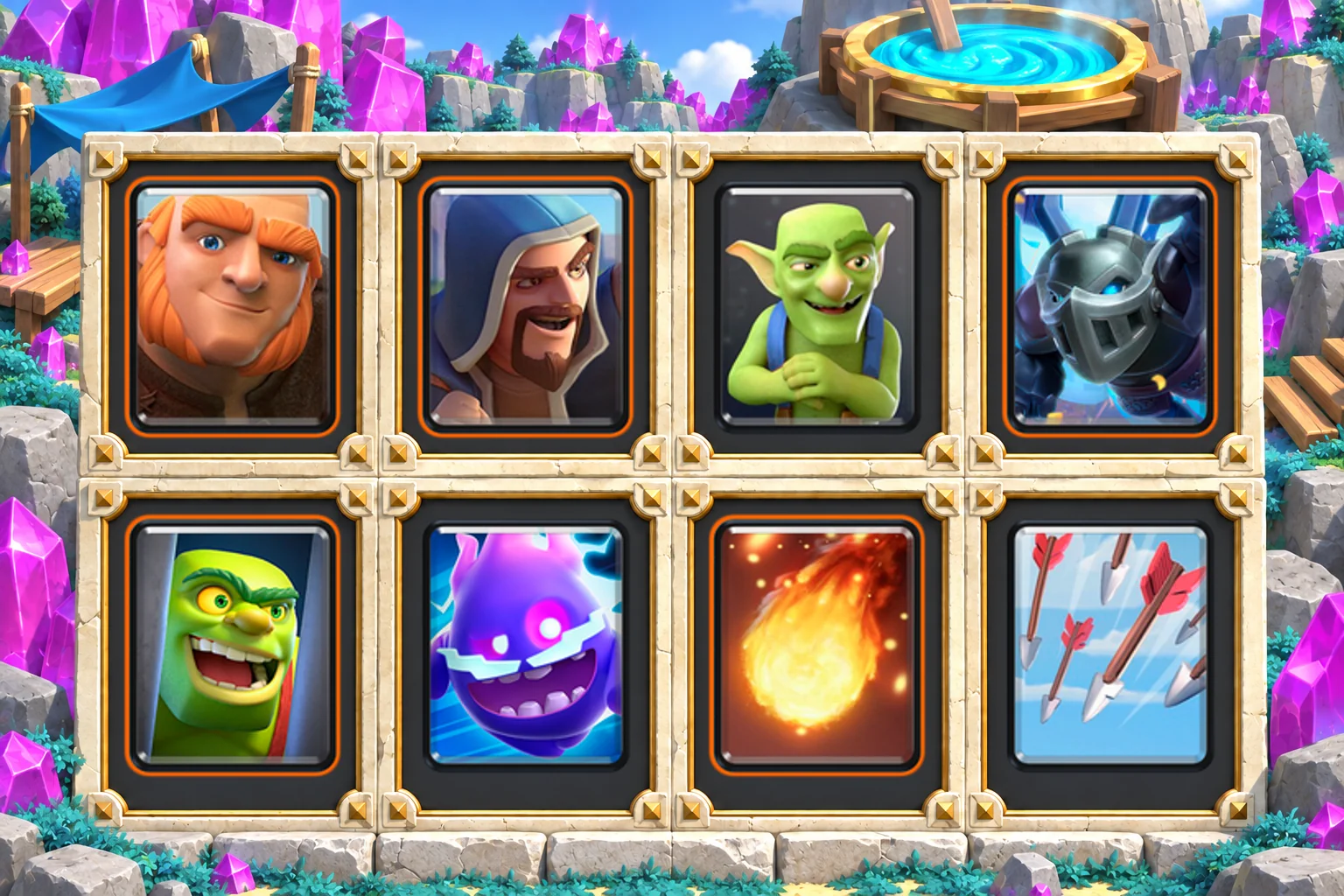
Average elixir: 3.4
Eight cards and their jobs
- Giant (5 elixir): Building-targeting tank placed in front of surviving defenders.
- Wizard (5 elixir): Ranged air and ground splash; protect him while another card damages high-health targets.
- Goblins (2 elixir): Cheap melee damage and surrounds; wait until enemy splash is occupied.
- Mega Minion (3 elixir): Durable single flying attacker for focused air or ground damage.
- Goblin Cage (4 elixir): Pulls building-targeting threats, then releases a ground Brawler counterpush.
- Electro Spirit (1 elixir): Chain stun and small damage across multiple targets; not a sustained defender.
- Fireball (4 elixir): Immediate area damage and knockback; spend for useful defense or support value.
- Arrows (3 elixir): Wide air and ground swarm removal; no reset effect.
Protect the cheap screen from its splash counter
Goblins and the Cage Brawler supply much of the ground damage normally assigned to Mini P.E.K.K.A. Wizard protects that cheap screen from clustered blockers. The cheaper support gives you more options, but an enemy splash troop can remove Goblins before they damage the tank.
Opening and double elixir
A reactive Cage lets you inspect the opponent's support before selecting Wizard or Goblins. Do not open with five-elixir splash merely because it is available. When Giant leads a survivor later, add Goblins only after the enemy's splash is occupied, and retain Electro Spirit for an interruption that can actually connect.
Defensive order and matchups
Against Giant Mini P.E.K.K.A: Cage can draw Giant while Goblins distract its accompanying Mini P.E.K.K.A. Place the screen so the melee attacker engages it away from your important shooter. Wizard or Brawler still needs to help finish the resulting position; a distraction is useful because it buys damage time, not because it removes the threat by itself.
Against Minions: Wizard handles the group from a protected position. Arrows is available when the Minions would remove him before his useful shot. Mega Minion can add focused damage, but stacking it into the same enemy support line is unnecessary if Wizard and tower fire already cover the attack.
A decision during the match
Giant arrives with Bomber behind. Dropping Goblins directly around Giant gives Bomber an easy group. Wait for Wizard or Brawler to engage that support, or use another appropriate answer first. The cheap screen becomes valuable after the splash problem is handled, not before.
Mistake to avoid: Sending the cheap screen directly into live splash.
One-card alternatives and upgrades
- Mini P.E.K.K.A for Goblins: More robust concentrated ground damage at extra cost. New average 3.6 elixir.
- Fire Spirit for Electro Spirit: More swarm burst but no stun/reset. New average 3.4 elixir.
Upgrade focus: Giant, Wizard, Cage, Fireball.
Wizard and Cage support the whole defensive sequence, so improve the failed interaction there before buying several unused win conditions. Mini P.E.K.K.A is a more resilient damage replacement for Goblins at extra cost. Fire Spirit gives burst instead of Electro Spirit's interruption, removing a useful potential reset.
Battle Ram pressure behind surviving defenders
Battle Ram costs four, but the smaller attack still requires a useful opening. The following variations change the pull, splash and damage you can preserve behind that decision.
Ram Musketeer Cannon
A straightforward Ram starter for careful counterattacks.

Average elixir: 3.4
Eight cards and their jobs
- Battle Ram (4 elixir): Building-targeting charge and surviving Barbarians; punish a committed counter.
- Mini P.E.K.K.A (4 elixir): Concentrated ground damage against a tank or other high-health attacker.
- Musketeer (4 elixir): Sustained ranged air and ground damage; keep her away from overlapping spell value.
- Bomber (2 elixir): Cheap ground splash behind a tank or defensive distraction; cannot shoot air.
- Mega Minion (3 elixir): Durable single flying attacker for focused air or ground damage.
- Cannon (3 elixir): Cheap ground-targeting pull; can draw Balloon but cannot shoot it.
- Fireball (4 elixir): Immediate area damage and knockback; spend for useful defense or support value.
- Arrows (3 elixir): Wide air and ground swarm removal; no reset effect.
Let one surviving defender justify the Ram
This Ram version keeps the straightforward Cannon and Mini P.E.K.K.A defense while Bomber answers the small ground troops that interrupt pressure. Ram asks for four elixir after the defense, but that smaller commitment still needs a reason. A healthy central building can absorb another attack without becoming vulnerable merely because Ram is cheaper than Giant.
Opening and double elixir
Separate Musketeer from tower spell value and let Cannon respond to an actual approach. Learn the opponent's building before pairing Ram with support. In double elixir, a defender already walking forward can help, while a newly purchased Mini P.E.K.K.A may simply turn a modest attack into an eight-elixir commitment.
Defensive order and matchups
Against Giant: Redirect Giant and let Mini P.E.K.K.A reach it. Bomber clears small ground support where it can do so safely. If the support is a durable ranged unit, use the appropriate body or air damage rather than expecting Bomber's group-control role to solve that different problem instantly.
Against Battle Ram: Cannon should influence the charge before Ram gets to the tower. Once the Barbarians appear, Bomber can punish their grouping while the remaining damage finishes them. Avoid chasing a counterpush while one Barbarian is still landing important hits on an exposed target.
A decision during the match
Their Cannon survives your first Ram with useful health and lifetime. Another Ram sent immediately may give the same building a second efficient defense. Preserve the four elixir, defend their survivor and attack when the building's condition or their remaining hand has actually changed.
Mistake to avoid: Every Ram does not need Mini P.E.K.K.A added behind it.
One-card alternatives and upgrades
- Goblin Cage for Cannon: More expensive pull and Brawler. New average 3.5 elixir.
- Fire Spirit for Bomber: Cheaper burst, no persistent splash. New average 3.3 elixir.
Upgrade focus: Battle Ram, Musketeer, Mini P.E.K.K.A, Fireball.
Keep Musketeer and Mini P.E.K.K.A effective so Ram attacks emerge from stable defenses. A Cage adds a Brawler at extra cost, while Fire Spirit reduces the support bill but gives only one burst. Choose the substitution whose lost benefit you can cover elsewhere.
Ram Inferno Wizard Control
For tank-heavy opponents and a leveled Wizard.
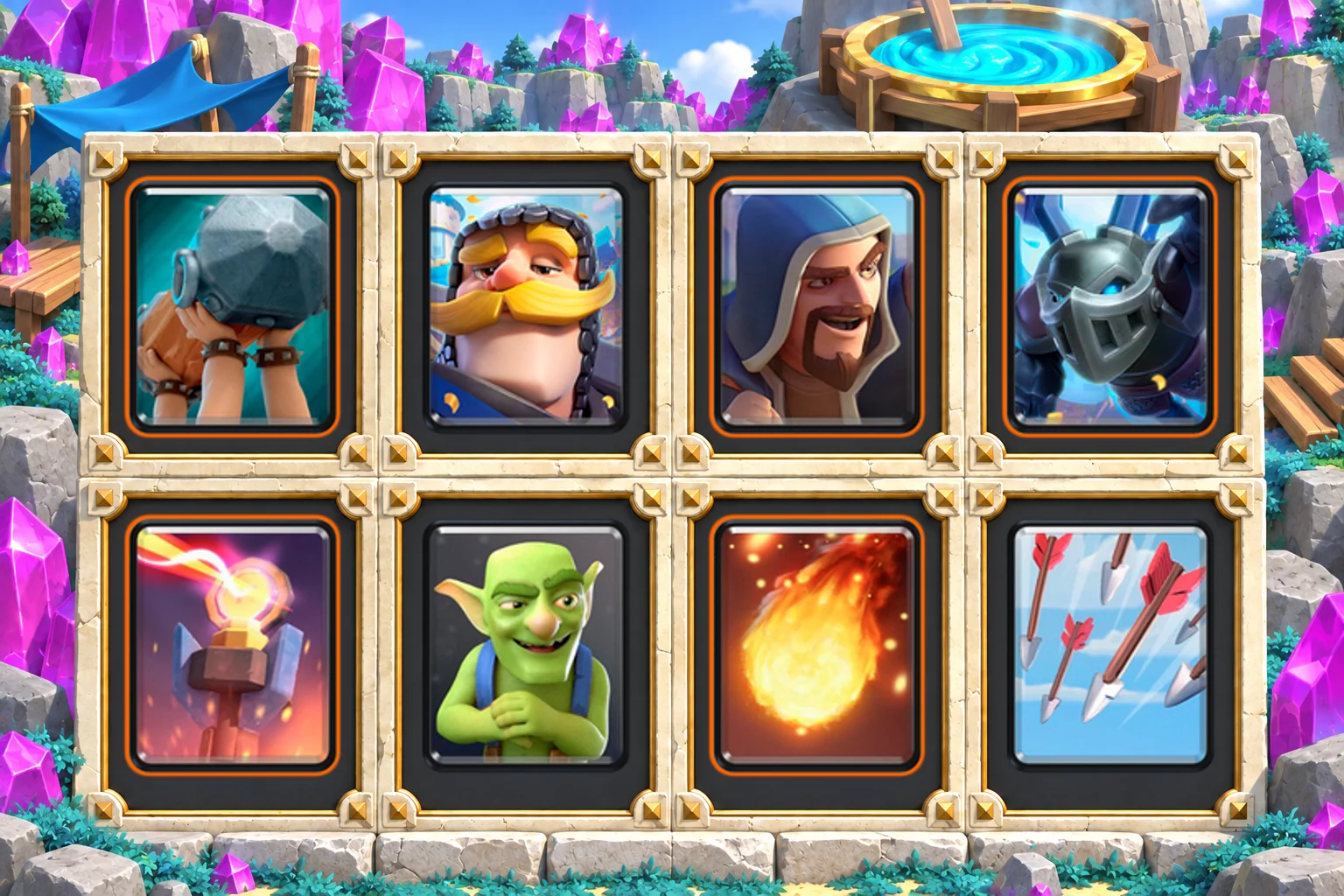
Average elixir: 3.6
Eight cards and their jobs
- Battle Ram (4 elixir): Building-targeting charge and surviving Barbarians; punish a committed counter.
- Knight (3 elixir): Low-cost ground tank that occupies support and protects ranged damage.
- Wizard (5 elixir): Ranged air and ground splash; protect him while another card damages high-health targets.
- Mega Minion (3 elixir): Durable single flying attacker for focused air or ground damage.
- Inferno Tower (5 elixir): Increasing damage against a focused target; protect it against reset and distractions.
- Goblins (2 elixir): Cheap melee damage and surrounds; wait until enemy splash is occupied.
- Fireball (4 elixir): Immediate area damage and knockback; spend for useful defense or support value.
- Arrows (3 elixir): Wide air and ground swarm removal; no reset effect.
Keep Wizard available until the beam is secure
Inferno carries the tank-damage burden while Knight occupies supporting ground units. Wizard clears groups that interfere with the beam. This makes a substantial defensive investment, so Ram should follow only when a survivor and available elixir justify it, rather than becoming an automatic extra purchase after every building.
Opening and double elixir
Knight can address a smaller threat without revealing Inferno unnecessarily. Holding Wizard is useful until you know which group needs removal. In double elixir, complete the defense before moving the splash shooter forward; if Inferno still needs protection, the attack has not earned its support yet.
Defensive order and matchups
Against Giant: Clear cheap troops that would acquire the initial lock before Giant. A newly nearby body does not automatically pull an established beam off its target. Knight should interfere with the accompanying support while the building ramps. Goblins can add damage after splash is occupied, but putting them directly into a Bomber's firing line can remove the backup at the exact moment Inferno needs help.
Against Skeleton Dragons: Use Wizard and Mega Minion from different directions when possible. The Dragons can give splash or a spell two bodies, but Arrows should not be assumed to remove healthy Skeleton Dragons by itself. Consider actual levels and remaining health before spending a second answer on a result you have not checked.
A decision during the match
Wizard survives the first part of a Giant defense and Ram is ready. If Inferno initially locked onto cheap bodies and has not yet acquired Giant, sending Wizard forward abandons his critical job. Clear that interference first, then judge whether he has enough health and time left to support an attack.
Mistake to avoid: Using Inferno as an opening card without a target.
One-card alternatives and upgrades
- Valkyrie for Knight: Ground splash at extra cost. New average 3.8 elixir.
- Skeletons for Goblins: Cheaper distraction with much less damage. New average 3.5 elixir.
Upgrade focus: Battle Ram, Inferno Tower, Wizard, Fireball.
Inferno durability and Wizard's useful damage matter more than making every Ram attack larger. Valkyrie buys ground splash at extra cost; Skeletons save elixir but lose Goblins' damage. Neither change should be judged by average alone because it changes what remains when the beam is interrupted.
Ram Skeleton Dragons Cage
For airborne splash and a durable ground front line.

Average elixir: 3.5
Eight cards and their jobs
- Battle Ram (4 elixir): Building-targeting charge and surviving Barbarians; punish a committed counter.
- Valkyrie (4 elixir): Ground splash defender for clustered support and swarms; cannot attack air.
- Skeleton Dragons (4 elixir): Two flying splash units that cover air and ground groups; protect their fragile bodies.
- Musketeer (4 elixir): Sustained ranged air and ground damage; keep her away from overlapping spell value.
- Goblin Cage (4 elixir): Pulls building-targeting threats, then releases a ground Brawler counterpush.
- Skeletons (1 elixir): One-elixir ground distraction that buys shots and helps rotate the hand.
- Fireball (4 elixir): Immediate area damage and knockback; spend for useful defense or support value.
- Arrows (3 elixir): Wide air and ground swarm removal; no reset effect.
Give the two shooting groups different angles
Cage and Valkyrie handle contact while Skeleton Dragons fire over ground defenders. Musketeer supplies focused damage that the splash pair lacks. The strength is complementary coverage; the weakness is offering all the expensive ranged support to one spell or a Wizard positioned to splash through the entire group.
Opening and double elixir
Use Skeletons for a small safe distraction or wait for a Cage target. Dragons need a useful defensive assignment before becoming offensive support. In double elixir, let Valkyrie take the ground contact near a Ram attack, but watch the charge speed and avoid assuming she stays in front forever.
Defensive order and matchups
Against Barbarians: Protected Dragons can splash the Barbarian group while Valkyrie absorbs contact. Fireball is another option when the board makes that investment useful. Do not buy Valkyrie, Dragons and the spell automatically: if the existing defense already wins the exchange, preserve the next ranged answer.
Against Giant: Cage redirects Giant so Musketeer can keep firing. Valkyrie should work on the ground support rather than spending the whole fight slowly attacking the tank. Dragons help where their splash matters, with their position separated from Musketeer when the opponent can punish a single cluster.
A decision during the match
You can deploy Musketeer immediately beside both Dragons, but the opponent still has Fireball. Staggering her position or timing may retain an air answer after the spell. If that means a smaller Ram counterpush, take the smaller attack instead of risking every damage card together.
Mistake to avoid: Treating flying support as immune to ranged splash.
One-card alternatives and upgrades
- Electro Spirit for Skeletons: Chain stun and air delay instead of bodies. New average 3.5 elixir.
- Knight for Valkyrie: Cheaper tanking, no ground splash. New average 3.4 elixir.
Upgrade focus: Battle Ram, Skeleton Dragons, Musketeer, Cage.
Upgrade the Dragons if aerial splash is the reason this version suits your collection. Keep Musketeer useful as the concentrated damage source. Knight lowers the cost but removes Valkyrie's group control, so the Dragons and spells must carry more of that responsibility.
Ram Bomb Tower Double Air
A ground-swarm defender with two reliable damage directions.
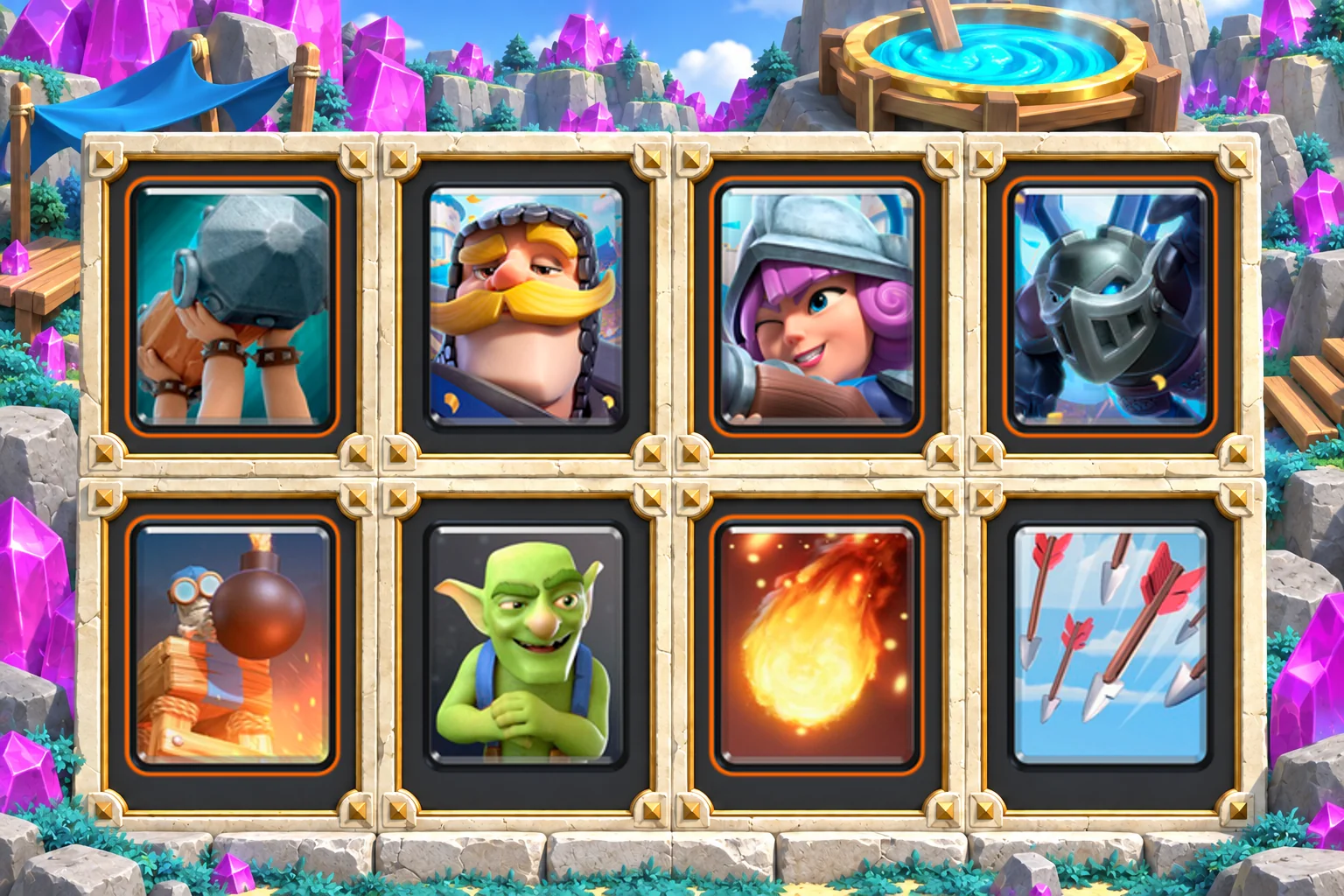
Average elixir: 3.4
Eight cards and their jobs
- Battle Ram (4 elixir): Building-targeting charge and surviving Barbarians; punish a committed counter.
- Knight (3 elixir): Low-cost ground tank that occupies support and protects ranged damage.
- Musketeer (4 elixir): Sustained ranged air and ground damage; keep her away from overlapping spell value.
- Mega Minion (3 elixir): Durable single flying attacker for focused air or ground damage.
- Bomb Tower (4 elixir): Ground splash building and pull; it cannot shoot flying attackers.
- Goblins (2 elixir): Cheap melee damage and surrounds; wait until enemy splash is occupied.
- Fireball (4 elixir): Immediate area damage and knockback; spend for useful defense or support value.
- Arrows (3 elixir): Wide air and ground swarm removal; no reset effect.
Finish the tank behind the splash building
Bomb Tower clears groups while Knight keeps the supporting unit busy. Goblins and Mega Minion provide damage against high health. Unlike a Mini P.E.K.K.A version, this list depends on fragile ground bodies surviving long enough to help, so its support separation must happen before the surround.
Opening and double elixir
Wait for the right building target or use Knight on a small defensive job. A blind Ram plus ranged support can expose the cards you need to finish the next Giant. In double elixir, preserve Goblins if the opponent's tank is close to returning instead of adding them to every attack.
Defensive order and matchups
Against Barbarians: The building's splash and safe ranged shots can handle a grouped Barbarian approach. Goblins should not be dropped into the same crowded contact merely because they are cheap. Let the existing area damage work and add a backup only when the remaining health or support makes it necessary.
Against Giant: Pull Giant, occupy its support with Knight and then use Goblins on the isolated tank. Mega Minion adds damage from above. If the Goblins are removed, assess the remaining damage before spending on Ram; the building alone may not finish the health target quickly enough.
A decision during the match
Arrows removes Goblins during the tank exchange. Mega Minion is now an essential damage source, not spare bridge pressure. Keep it on defense until Giant is secure, even if Knight is already walking forward and appears to invite a Ram counterpush.
Mistake to avoid: Assuming Bomb Tower supplies enough single-target damage by itself.
One-card alternatives and upgrades
- Mini P.E.K.K.A for Goblins: Reliable concentrated damage at higher cost. New average 3.6 elixir.
- Valkyrie for Knight: Ground splash and more cost. New average 3.5 elixir.
Upgrade focus: Battle Ram, Musketeer, Bomb Tower, Fireball.
Improve the reliable shooter and the building that buys its time. Mini P.E.K.K.A costs more than Goblins but gives concentrated damage less dependent on several fragile bodies. Valkyrie also raises the price, so applying both alternatives would meaningfully change the original hand.
Ram Barbarians Split Defense
For two-lane defense and strong Barbarians.

Average elixir: 3.5
Eight cards and their jobs
- Battle Ram (4 elixir): Building-targeting charge and surviving Barbarians; punish a committed counter.
- Barbarians (5 elixir): Five ground damage bodies for a committed attacker; avoid feeding them into untouched splash.
- Archers (3 elixir): Split-capable air and ground damage; avoid clustering both with another fragile defender.
- Mega Minion (3 elixir): Durable single flying attacker for focused air or ground damage.
- Bomber (2 elixir): Cheap ground splash behind a tank or defensive distraction; cannot shoot air.
- Goblin Cage (4 elixir): Pulls building-targeting threats, then releases a ground Brawler counterpush.
- Fireball (4 elixir): Immediate area damage and knockback; spend for useful defense or support value.
- Arrows (3 elixir): Wide air and ground swarm removal; no reset effect.
Use split coverage without exposing every Barbarian
Barbarians give this deck a strong ground surround, while split Archers retain a presence in both lanes. Cage helps shape the fight before the surround begins. The danger is shared spell value: a large group of defenders can lose most of its purpose if splash remains free to shoot through it.
Opening and double elixir
Split Archers when the board permits, then wait for a worthwhile Barbarian target. Playing five at the bridge before learning the opponent's removal can leave the next defense without its main damage group. In double elixir, choose the Ram lane based on healthy survivors and an affordable reserve.
Defensive order and matchups
Against Giant: Cage changes Giant's path while you deal with the supporting splash. Surround only after those shots are occupied or removed. If the enemy support remains untouched, use Bomber or the air damage appropriately rather than assuming five bodies can survive any line of fire.
Against Wizard: Do not deploy the Barbarians as a single easy target in front of a protected Wizard. Let a Brawler or another suitable body occupy him when the board permits, then attack from a position that avoids giving every Barbarian to the same splash. Sometimes the correct answer is a spell or a smaller defense.
A decision during the match
Fireball just caught Archers, which makes Barbarians look safer. Check for Wizard before committing them: a spent spell has removed one answer, not every group counter. Use Cage to establish the fight and preserve Mega Minion if the ranged support needs separate attention.
Mistake to avoid: Barbarians at bridge with no enemy to defend and no spell information.
One-card alternatives and upgrades
- Mini P.E.K.K.A for Barbarians: Cheaper focused damage but fewer bodies. New average 3.4 elixir.
- Fire Spirit for Bomber: Cheaper burst, loses sustained splash. New average 3.4 elixir.
Upgrade focus: Battle Ram, Barbarians, Archers, Fireball.
Barbarian levels matter only if the group reaches its target alive. Maintain the Archer coverage and relevant spell alongside them. Mini P.E.K.K.A reduces the bill and gives fewer bodies, while Fire Spirit removes Bomber's continuing splash; both swaps change the shape of the defense.
Ram Electro Spirit Rotation
For faster return to Ram without sacrificing two air shooters.

Average elixir: 3.1
Eight cards and their jobs
- Battle Ram (4 elixir): Building-targeting charge and surviving Barbarians; punish a committed counter.
- Knight (3 elixir): Low-cost ground tank that occupies support and protects ranged damage.
- Musketeer (4 elixir): Sustained ranged air and ground damage; keep her away from overlapping spell value.
- Mega Minion (3 elixir): Durable single flying attacker for focused air or ground damage.
- Cannon (3 elixir): Cheap ground-targeting pull; can draw Balloon but cannot shoot it.
- Electro Spirit (1 elixir): Chain stun and small damage across multiple targets; not a sustained defender.
- Fireball (4 elixir): Immediate area damage and knockback; spend for useful defense or support value.
- Arrows (3 elixir): Wide air and ground swarm removal; no reset effect.
Save Electro Spirit for a target it can reach
This lighter Ram list retains two real air damage cards rather than treating Electro Spirit as an entire air defense. Knight buys contact time and Cannon redirects the ground threat. The cheap Spirit helps rotation, but the deck still needs sustained damage behind the moment it buys.
Opening and double elixir
An unnecessary Spirit cycle can put the useful interruption out of hand when the opponent commits. Keep it if the rest of the hand already covers a quiet board. In double elixir, repeat Ram only after the next defense is affordable and the Spirit has a meaningful target to reach.
Defensive order and matchups
Against Giant: Cannon redirects Giant while Mega Minion supplies focused damage. Knight is better used occupying support than slowly working on the tank beside every other card. Musketeer should remain safely separated, especially when a spell could remove her and the useful ground position together.
Against Inferno Tower: A Spirit can interrupt Inferno only if its approach or chain reaches the building. A distraction may change that route. Even a successful interruption is brief, so do not spend it unless Ram or another survivor can use the resulting time before the beam returns.
A decision during the match
The enemy places a troop where your Spirit cannot chain onward to Inferno. Sending the Spirit and another support card may only enlarge the failed Ram attack. Accept the defense, retain your own shooters and seek the next opportunity after the building or its protection changes.
Mistake to avoid: Confusing a cheap cycle with the ability to defend any push for one card.
One-card alternatives and upgrades
- Valkyrie for Knight: More ground splash, slower cycle. New average 3.3 elixir.
- Skeletons for Electro Spirit: Persistent ground distraction, no air stun. New average 3.1 elixir.
Upgrade focus: Battle Ram, Musketeer, Cannon, Fireball.
Keep Cannon and Musketeer reliable before chasing a faster-looking average. Valkyrie adds ground splash for one extra elixir and slows the return to Ram. Skeletons replace the Spirit with persistent ground bodies, which can be useful but remove the air interruption and potential beam reset you had before.
Ram Fire Spirit Screen
For fast swarm removal in front of a charged attack.

Average elixir: 3.3
Eight cards and their jobs
- Battle Ram (4 elixir): Building-targeting charge and surviving Barbarians; punish a committed counter.
- Mini P.E.K.K.A (4 elixir): Concentrated ground damage against a tank or other high-health attacker.
- Archers (3 elixir): Split-capable air and ground damage; avoid clustering both with another fragile defender.
- Mega Minion (3 elixir): Durable single flying attacker for focused air or ground damage.
- Goblin Cage (4 elixir): Pulls building-targeting threats, then releases a ground Brawler counterpush.
- Fire Spirit (1 elixir): Cheap area damage against grouped defenders; does not replace an air shooter.
- Fireball (4 elixir): Immediate area damage and knockback; spend for useful defense or support value.
- Arrows (3 elixir): Wide air and ground swarm removal; no reset effect.
Remove the cheap blocker after it appears
Fire Spirit complements a Ram attack when the obstacle is a clustered cheap group. It does little to solve a durable Valkyrie or a healthy building. Cage and Mini P.E.K.K.A carry the ground defense, while split Archers and Mega Minion let you retain air damage without buying an expensive splash shooter.
Opening and double elixir
Split Archers if coverage in both lanes is useful, then save the Spirit until you see the actual blocker. Sending it early can let the opponent absorb the jump with another unit. In double elixir, time the support so Ram benefits, while keeping Mini P.E.K.K.A available for the returning tank.
Defensive order and matchups
Against Goblins: The Spirit needs a route and timing that catch the Goblins before they remove the important attacker. Arrows is another choice when the board or levels make the burst uncertain. Do not send a second four-elixir melee card merely to avoid using the appropriate group answer.
Against Giant: Cage changes the route and Mini P.E.K.K.A handles Giant's health. Mega Minion can work on support from a safe angle while Archers maintain coverage. If all the ranged damage joins the counterpush, the next air group may arrive with only ground cards left to answer it.
A decision during the match
Valkyrie stops Ram and remains healthy. Fire Spirit can damage her, but it does not turn this into the swarm interaction the card was selected for. Let the attack end unless another purchase has concrete value, then defend Valkyrie's counterpush with the appropriate ground answer.
Mistake to avoid: Using Spirit as if it were a medium spell against every defender.
One-card alternatives and upgrades
- Bomber for Fire Spirit: Persistent ground splash for one more elixir. New average 3.4 elixir.
- Musketeer for Archers: One sturdier shooter at extra cost. New average 3.4 elixir.
Upgrade focus: Battle Ram, Mini P.E.K.K.A, Archers, Arrows.
Mini P.E.K.K.A and Archers need useful levels for their defensive jobs. Bomber replaces the single burst with sustained ground splash at extra cost; Musketeer provides one sturdier shooter rather than split coverage. Decide which failed interaction you want to repair before choosing either change.
Ram Goblin Hut Counterpush
A reactive ranged-building defense that can leave support for Ram.

Average elixir: 3.5
Eight cards and their jobs
- Battle Ram (4 elixir): Building-targeting charge and surviving Barbarians; punish a committed counter.
- Valkyrie (4 elixir): Ground splash defender for clustered support and swarms; cannot attack air.
- Musketeer (4 elixir): Sustained ranged air and ground damage; keep her away from overlapping spell value.
- Mega Minion (3 elixir): Durable single flying attacker for focused air or ground damage.
- Goblin Hut (4 elixir): Reactive defensive building that produces Spear Goblins when enemy troops approach; not a passive chip spawner.
- Goblins (2 elixir): Cheap melee damage and surrounds; wait until enemy splash is occupied.
- Fireball (4 elixir): Immediate area damage and knockback; spend for useful defense or support value.
- Arrows (3 elixir): Wide air and ground swarm removal; no reset effect.
Activate the Hut before counting its Spears
This version uses the Hut as a reactive pull with ranged support. Valkyrie occupies ground groups and Goblins add damage once splash is busy. The Spears can help surviving troops support Ram, but they are fragile and conditional: an inactive building or a well-timed removal spell can leave much less damage than you expected.
Opening and double elixir
Wait for an approach that can activate the Hut rather than placing it for passive chip. A safe Valkyrie defense may be a smaller initial commitment. In double elixir, use existing support for Ram while retaining Musketeer for the next air exchange instead of rebuilding every part of the previous defense.
Defensive order and matchups
Against Giant: Let the approaching Giant engage the Hut's area while Valkyrie deals with accompanying ground splash. Goblins can then contribute against the tank. If they would still stand inside Bomber's attacks, hold them and let a safer damage source work until the support is occupied.
Against Battle Ram: The building changes Ram's path and Valkyrie helps remove the Barbarians it releases. Watch whether another support troop is damaging the Spears at the same time. If so, the Hut's contribution may be smaller than usual, and Musketeer or Mega Minion may still have an important defensive job.
A decision during the match
A spell removes the emerging Spears while their attacker remains healthy. Ram pressure does not replace that lost damage. Reserve Musketeer or Mega Minion to finish the defense, then judge the counterpush from the actual survivors rather than the support the Hut was supposed to provide.
Mistake to avoid: Using outdated five-elixir cost or describing passive wave spawning.
One-card alternatives and upgrades
- Goblin Cage for Goblin Hut: Same-cost pull with melee Brawler rather than Spears. New average 3.5 elixir.
- Mini P.E.K.K.A for Goblins: More resilient tank damage for two extra elixir. New average 3.8 elixir.
Upgrade focus: Battle Ram, Musketeer, Valkyrie, Goblin Hut.
Hut and Valkyrie upgrades support the version's defensive identity, but the air shooter must remain useful. Cage keeps the same cost and offers a melee Brawler instead of ranged spawning. Mini P.E.K.K.A adds sturdier damage at a higher price, making the next Ram commitment less immediate.
Ram Wizard Minion Pressure
For protected Wizard splash and Minions as separate concentrated damage.

Average elixir: 3.4
Eight cards and their jobs
- Battle Ram (4 elixir): Building-targeting charge and surviving Barbarians; punish a committed counter.
- Mini P.E.K.K.A (4 elixir): Concentrated ground damage against a tank or other high-health attacker.
- Wizard (5 elixir): Ranged air and ground splash; protect him while another card damages high-health targets.
- Minions (3 elixir): Three flying damage bodies; stagger their use around enemy removal spells.
- Tombstone (3 elixir): Defensive pull with Skeleton distractions; vulnerable to splash.
- Skeletons (1 elixir): One-elixir ground distraction that buys shots and helps rotate the hand.
- Fireball (4 elixir): Immediate area damage and knockback; spend for useful defense or support value.
- Arrows (3 elixir): Wide air and ground swarm removal; no reset effect.
Keep Minions separate from the splash shooter
Wizard clears clusters while Minions bring concentrated damage from several bodies. Tombstone and Skeletons create distractions so those damage cards can work. The weakness is overlapping removal: if Wizard and Minions enter the same spell or splash line, the remaining ground cards cannot replace their air coverage.
Opening and double elixir
Use Tombstone reactively and hold Wizard for a meaningful group. Minions should not become a casual opening when Arrows has not been identified. Later, a surviving Wizard can support Ram, but adding Minions from hand should solve a visible problem rather than decorate an already adequate attack.
Defensive order and matchups
Against Giant: Mini P.E.K.K.A handles Giant's health while Wizard clears surrounding small troops. Keep Wizard far enough from the melee contact that support splash cannot freely hit both. Tombstone alters the route, allowing each damage card to attack the target that suits it rather than pile onto the tank together.
Against Musketeer: Minions approaching an unoccupied Musketeer can lose their value before surrounding her. A distraction or useful Fireball overlap may create a better fight. Check her remaining health and other nearby defenders before spending the spell, since a damaged shooter can still stop a poorly timed attack.
A decision during the match
Arrows has not been used and Wizard is walking forward. Ram alone may make the opponent respond, while adding Minions gives the held spell an obvious target. Keep that group for a later defensive timing unless it solves something the current attack cannot otherwise handle.
Mistake to avoid: Wizard and Minions both exposed to one splash defender.
One-card alternatives and upgrades
- Mega Minion for Minions: More resilient single flyer, less multi-body damage. New average 3.4 elixir.
- Electro Spirit for Skeletons: Chain stun instead of persistent ground distraction. New average 3.4 elixir.
Upgrade focus: Battle Ram, Wizard, Mini P.E.K.K.A, Fireball.
Wizard and Mini P.E.K.K.A perform different necessary jobs, so keep both useful before expanding the offensive investment. Mega Minion provides a less fragile single flyer in place of Minions but removes body count. The Spirit alternative supplies interruption instead of Skeletons' persistent ground distraction.
Ram Valkyrie Archer Cycle
For lower-cost ranged support and forgiving ground splash.

Average elixir: 3.1
Eight cards and their jobs
- Battle Ram (4 elixir): Building-targeting charge and surviving Barbarians; punish a committed counter.
- Valkyrie (4 elixir): Ground splash defender for clustered support and swarms; cannot attack air.
- Archers (3 elixir): Split-capable air and ground damage; avoid clustering both with another fragile defender.
- Mega Minion (3 elixir): Durable single flying attacker for focused air or ground damage.
- Cannon (3 elixir): Cheap ground-targeting pull; can draw Balloon but cannot shoot it.
- Skeletons (1 elixir): One-elixir ground distraction that buys shots and helps rotate the hand.
- Fireball (4 elixir): Immediate area damage and knockback; spend for useful defense or support value.
- Arrows (3 elixir): Wide air and ground swarm removal; no reset effect.
Use the second lane without moving every defender
Archers let this lower-cost Ram list maintain two shooting positions. Valkyrie handles ground groups and Mega Minion gives the focused damage needed behind Cannon. The lighter hand can return to Ram sooner, but it still depends on preserving that flyer rather than treating cheap rotation as a substitute for tank damage.
Opening and double elixir
Split Archers when the board makes two-lane coverage useful. Skeletons can adjust a safe hand, but Cannon should remain available for the actual building-targeting threat. In double elixir, a Valkyrie survivor can accompany Ram without requiring both Archers to abandon the other lane.
Defensive order and matchups
Against Battle Ram: Cannon changes the charge path and Valkyrie meets the released Barbarians. Let the tower and existing ranged damage help before adding another expensive answer. Mega Minion may be more valuable held for a separate threat than joining a defense already covered by splash and the pull.
Against Giant Bomber: Valkyrie should occupy Bomber while Cannon draws Giant and Mega Minion works on its health. If Bomber remains free, fragile Skeletons or Archers placed in the same area can vanish. Wait for the support engagement rather than rushing every cheap card onto the tank.
A decision during the match
An Archer is already defending the other lane and Ram is ready behind Valkyrie. Keep that useful coverage instead of trying to buy a complete support group for the attack. If the opponent commits more to that lane, Mega Minion can reinforce it while Ram asks for a smaller response elsewhere.
Mistake to avoid: Cycling Mega Minion before identifying the opponent's durable attacker.
One-card alternatives and upgrades
- Musketeer for Archers: Sturdier single shooter, loses split flexibility. New average 3.3 elixir.
- Goblins for Skeletons: More damage for one extra elixir. New average 3.3 elixir.
Upgrade focus: Battle Ram, Archers, Valkyrie, Fireball.
Archers and Valkyrie should be effective in the defensive roles that make this version comfortable. Musketeer costs more and concentrates the ranged damage in one unit. Goblins add damage in place of Skeletons, but the extra elixir slightly reduces the flexibility that made the original hand attractive.
Ram Inferno Double Flyers
For heavy tank defense with aerial splash and damage separated.
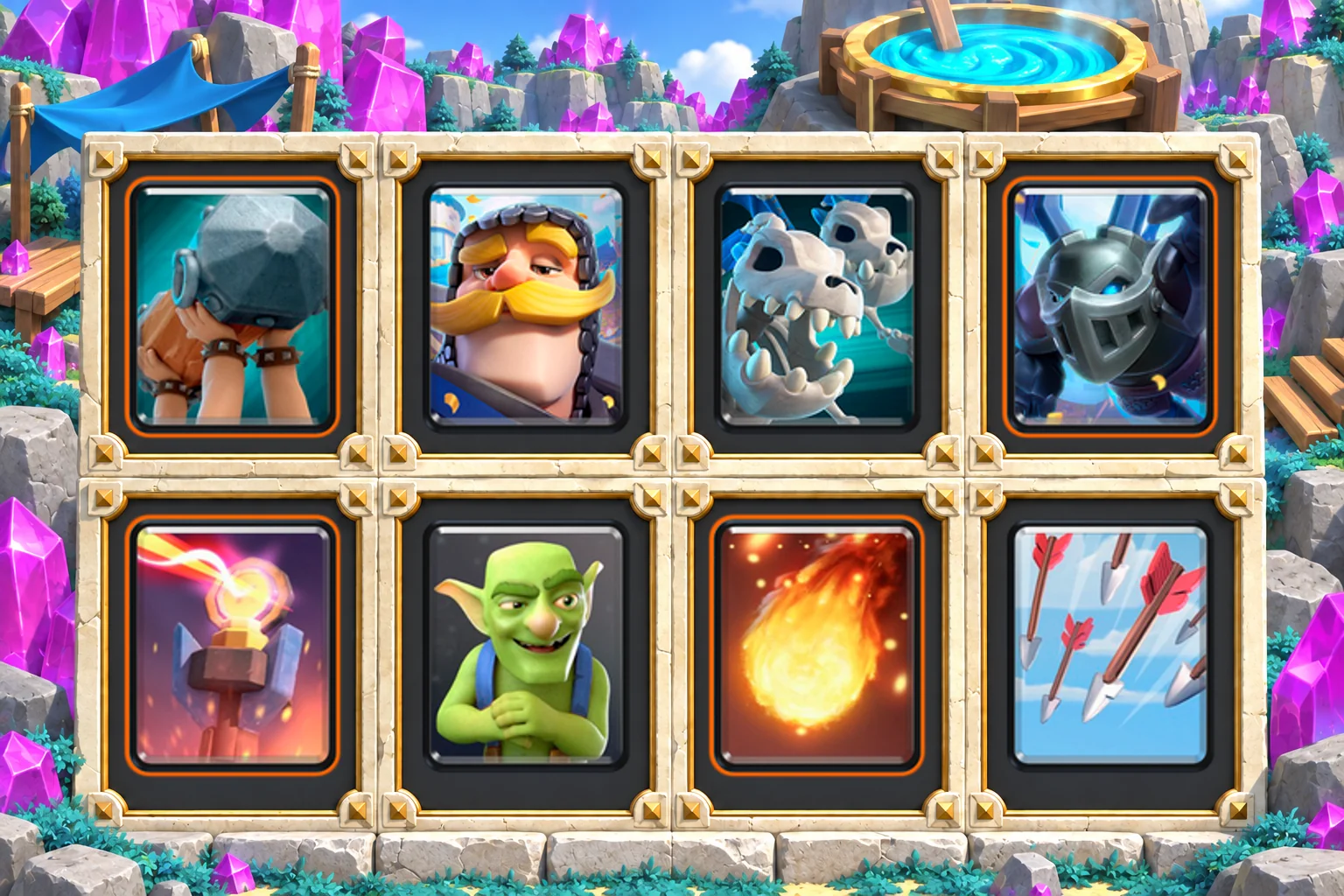
Average elixir: 3.5
Eight cards and their jobs
- Battle Ram (4 elixir): Building-targeting charge and surviving Barbarians; punish a committed counter.
- Knight (3 elixir): Low-cost ground tank that occupies support and protects ranged damage.
- Skeleton Dragons (4 elixir): Two flying splash units that cover air and ground groups; protect their fragile bodies.
- Mega Minion (3 elixir): Durable single flying attacker for focused air or ground damage.
- Inferno Tower (5 elixir): Increasing damage against a focused target; protect it against reset and distractions.
- Goblins (2 elixir): Cheap melee damage and surrounds; wait until enemy splash is occupied.
- Fireball (4 elixir): Immediate area damage and knockback; spend for useful defense or support value.
- Arrows (3 elixir): Wide air and ground swarm removal; no reset effect.
Keep Skeleton Dragons and Mega Minion apart while Inferno Tower works
Inferno handles high health, Skeleton Dragons handle groups and Mega Minion deals concentrated flying damage. Those jobs are complementary only when their positions stay useful. A Wizard or a single area spell can punish both flyers if you stack them, leaving the expensive building without the protection it needs.
Opening and double elixir
Knight can perform a small defensive job without spending Inferno before a tank appears. Preserve the Dragons until their splash has targets. Later, Ram is worth considering after a secure defense, but not if moving support forward leaves Inferno unprotected from the support that could destroy it or interrupt its beam.
Defensive order and matchups
Against Giant: Keep Inferno focused on Giant while Dragons clear small bodies near the fight. Knight should separate the ground support when possible. Goblins are helpful after splash is occupied; deploying them earlier can remove the cheap reserve without doing meaningful damage to the tank.
Against Wizard: Mega Minion needs time to reach Wizard without taking unopposed shots, and Dragons should not be sent as a single easy splash target. A ground body can occupy the shooter where the board permits. If no safe engagement exists, use a different defensive timing rather than forcing both flyers through him.
A decision during the match
Giant has moved toward Inferno while Wizard remains behind. Knight is ready and Ram looks attractive opposite lane. Use Knight on the dangerous support if that is necessary to protect the beam; the tank defense is worth more than buying a charge before its supporting threat is solved.
Mistake to avoid: Both flyers stacked directly into Wizard or a single spell.
One-card alternatives and upgrades
- Skeletons for Goblins: Cheaper distraction, much less damage. New average 3.4 elixir.
- Musketeer for Skeleton Dragons: Sturdier focused ground shooter, loses flying splash. New average 3.5 elixir.
Upgrade focus: Battle Ram, Inferno Tower, Skeleton Dragons, Fireball.
Inferno survival and the Dragons' splash interactions support this version's purpose. Musketeer replaces flying splash with focused ground-based shooting, so swarms require more help from spells. Skeletons lower the cost but leave much less ground damage than Goblins when the beam is interrupted.
Ram Mini P.E.K.K.A Hut
For strong cheap splash and a Hut that supports air defense.

Average elixir: 3.4
Eight cards and their jobs
- Battle Ram (4 elixir): Building-targeting charge and surviving Barbarians; punish a committed counter.
- Mini P.E.K.K.A (4 elixir): Concentrated ground damage against a tank or other high-health attacker.
- Archers (3 elixir): Split-capable air and ground damage; avoid clustering both with another fragile defender.
- Mega Minion (3 elixir): Durable single flying attacker for focused air or ground damage.
- Goblin Hut (4 elixir): Reactive defensive building that produces Spear Goblins when enemy troops approach; not a passive chip spawner.
- Bomber (2 elixir): Cheap ground splash behind a tank or defensive distraction; cannot shoot air.
- Fireball (4 elixir): Immediate area damage and knockback; spend for useful defense or support value.
- Arrows (3 elixir): Wide air and ground swarm removal; no reset effect.
Use Bomber on the ground screen, not the air group
Mini P.E.K.K.A removes the tank's health while Bomber clears small ground blockers. Archers and active Hut Spears supply ranged coverage, with Mega Minion adding focused damage. The support looks plentiful, but some of it is conditional or fragile, so losing Archers and Spears together can still leave a difficult air exchange.
Opening and double elixir
Split Archers where both lanes can benefit and wait for a Hut placement that approaching enemies will activate. Ram can lead a useful Mini P.E.K.K.A survivor later, but only if the known cheap blockers can be cleared without spending the entire defensive reserve.
Defensive order and matchups
Against Giant: The Hut changes Giant's path while Mini P.E.K.K.A attacks. Bomber removes ground bodies that would otherwise occupy the damage dealer. Keep Archers out of the same splash area and watch whether the Hut's Spears are surviving long enough to contribute rather than merely appearing.
Against Minions: Archers, Mega Minion and active Spears can supply damage against Minions, with Arrows available when immediate group removal is necessary. Bomber cannot attack air at all. Holding a Bomber in the hand therefore does not justify sending every true air answer behind Ram.
A decision during the match
An inactive Hut is taking spell damage and Ram is ready. Spending another four to force pressure does not recover the building's lost value. Keep the damage cards available, let the failed placement expire and deploy the next Hut for a fight that actually triggers its defensive contribution.
Mistake to avoid: Calling Bomber an air defender because he throws a projectile.
One-card alternatives and upgrades
- Goblin Cage for Goblin Hut: Melee Brawler instead of ranged spawning. New average 3.4 elixir.
- Musketeer for Archers: Single sturdier shooter at extra cost. New average 3.5 elixir.
Upgrade focus: Battle Ram, Mini P.E.K.K.A, Archers, Fireball.
Mini P.E.K.K.A and Archers keep the defense functioning when Spears are removed. Cage preserves the building cost but gives melee rather than ranged support. Musketeer is a sturdier single shooter at extra cost, with less ability to distribute coverage across the lanes.
Giant and Ram specialist choices
These six configurations carry Giant and Battle Ram together. They are specialist choices for deliberate timing, with heavier hands and fewer flexible defensive slots. Select one attacker for the position instead of treating both as a compulsory combination.
Giant Ram Two-Stage Pressure
Advanced two-win-condition choice for a developed collection.

Average elixir: 3.8
Eight cards and their jobs
- Giant (5 elixir): Building-targeting tank placed in front of surviving defenders.
- Battle Ram (4 elixir): Building-targeting charge and surviving Barbarians; punish a committed counter.
- Musketeer (4 elixir): Sustained ranged air and ground damage; keep her away from overlapping spell value.
- Mini P.E.K.K.A (4 elixir): Concentrated ground damage against a tank or other high-health attacker.
- Mega Minion (3 elixir): Durable single flying attacker for focused air or ground damage.
- Tombstone (3 elixir): Defensive pull with Skeleton distractions; vulnerable to splash.
- Fireball (4 elixir): Immediate area damage and knockback; spend for useful defense or support value.
- Arrows (3 elixir): Wide air and ground swarm removal; no reset effect.
Use the second attacker after the first answer changes
This specialist list carries two building-targeting threats, not a requirement to spend nine elixir together. Giant can protect a surviving defender, while Ram offers a quicker separate commitment. The extra win-condition slot leaves fewer cheap support options, so the hand becomes awkward if you attack before understanding the building and troop counters.
Opening and double elixir
Use Tombstone to organize the first defense and reveal one attacker at a time. Mini P.E.K.K.A must remain available against ground health. In double elixir, alternate pressure according to the opponent's remaining answer, keeping Musketeer and Mega Minion separated so one spell cannot erase the next defense.
Defensive order and matchups
Against Giant: Stop the incoming Giant before funding your own. Tombstone buys the route change and Mini P.E.K.K.A supplies damage. If the opponent's support remains dangerous, deal with it before treating a surviving shooter as permission to deploy Giant and Ram in different lanes.
Against Cannon: A healthy central Cannon may attract either building-targeting attacker. Sending both simultaneously can let one inexpensive structure shape the entire attack. Wait for its health, lifetime or surrounding defense to change, then choose the threat that can use the resulting opening without emptying your hand.
A decision during the match
Mini P.E.K.K.A commits to your Giant, so Ram opposite lane appears promising. Check whether Cannon is also ready and whether the enemy Mini P.E.K.K.A could survive into a counterpush. Use the second attacker only if the remaining defense is actually stretched and your own reserve still covers the return.
Mistake to avoid: Treating two attackers as permission to spend nine before defending.
One-card alternatives and upgrades
- Goblin Cage for Tombstone: Extra cost buys a Brawler. New average 3.9 elixir.
- Minions for Mega Minion: More bodies, more area-spell risk. New average 3.8 elixir.
Upgrade focus: Giant, Battle Ram, Musketeer, Fireball.
Choose one attacker as the primary plan for your current levels, then maintain the key defensive shooter and damage card. Cage adds cost and a Brawler; Minions preserve the flying-card price but increase removal exposure. Both alter how safely a second offensive commitment can follow defense.
Giant Ram Wizard Support
Two-stage ground pressure when Wizard clears the same recurring swarm.

Average elixir: 3.8
Eight cards and their jobs
- Giant (5 elixir): Building-targeting tank placed in front of surviving defenders.
- Battle Ram (4 elixir): Building-targeting charge and surviving Barbarians; punish a committed counter.
- Wizard (5 elixir): Ranged air and ground splash; protect him while another card damages high-health targets.
- Mega Minion (3 elixir): Durable single flying attacker for focused air or ground damage.
- Goblins (2 elixir): Cheap melee damage and surrounds; wait until enemy splash is occupied.
- Goblin Cage (4 elixir): Pulls building-targeting threats, then releases a ground Brawler counterpush.
- Fireball (4 elixir): Immediate area damage and knockback; spend for useful defense or support value.
- Arrows (3 elixir): Wide air and ground swarm removal; no reset effect.
Choose the attacker that fits the survivor
Wizard gives both Giant and Ram an answer to clustered ground or air defenders. Cage and Goblins cover the ground defense, with Mega Minion adding damage. This can suit a collection with a strong Wizard, but expensive splash plus two attackers creates weak hands if the cheap screen is removed.
Opening and double elixir
Wait for a useful Cage or Wizard defense instead of spending nine on both win conditions. Preserve Goblins until opposing splash is occupied. In double elixir, choose Giant when a healthy support line needs protection or Ram when a smaller commitment can pressure a genuine opening.
Defensive order and matchups
Against Barbarians: Let Wizard or a useful Fireball deal with the grouped Barbarians before sending both attackers into them. Their removal can make one surviving troop sufficient support. If the opposing group remains healthy, adding Giant and Ram may only enlarge the target without solving the blocker.
Against Giant: Cage draws Giant while Goblins attack after the support is occupied. Mega Minion can contribute against an exposed supporting unit or the tank as needed. Wizard should not be forced to supply all the concentrated damage while also being your only safe answer to a group.
A decision during the match
Wizard survives and you can afford either Giant or Ram, but only Ram leaves enough immediate reserve for the known next defense. Choose the smaller attack if it can use his remaining health. If neither attacker gives a useful result, the survivor can also walk forward alone.
Mistake to avoid: Paying Giant plus Wizard while Ram sits unplayable and defense is empty.
One-card alternatives and upgrades
- Mini P.E.K.K.A for Goblins: Stronger concentrated ground damage at extra cost. New average 4.0 elixir.
- Musketeer for Wizard: Cheaper focused air defense, loses splash. New average 3.6 elixir.
Upgrade focus: Giant, Battle Ram, Wizard, Fireball.
Wizard's level matters to the purpose of this variation, but Goblins and Cage must still buy him a workable defense. Mini P.E.K.K.A strengthens ground damage for extra cost. Musketeer lowers the support price while removing splash, shifting more group control to the two spells.
Giant Ram Skeleton Dragons
Dual ground pressure with split air support and a cheaper backup shooter.

Average elixir: 3.6
Eight cards and their jobs
- Giant (5 elixir): Building-targeting tank placed in front of surviving defenders.
- Battle Ram (4 elixir): Building-targeting charge and surviving Barbarians; punish a committed counter.
- Skeleton Dragons (4 elixir): Two flying splash units that cover air and ground groups; protect their fragile bodies.
- Mini P.E.K.K.A (4 elixir): Concentrated ground damage against a tank or other high-health attacker.
- Spear Goblins (2 elixir): Fragile low-cost air and ground damage that can be split; protect against small spells.
- Cannon (3 elixir): Cheap ground-targeting pull; can draw Balloon but cannot shoot it.
- Fireball (4 elixir): Immediate area damage and knockback; spend for useful defense or support value.
- Arrows (3 elixir): Wide air and ground swarm removal; no reset effect.
Preserve the main air group before buying both threats
Skeleton Dragons supply flying splash, and Spear Goblins provide a cheaper separate ranged option. Mini P.E.K.K.A remains the ground tank killer. The Spear backup is fragile, so this two-attacker version requires more care than a list with a sturdier second shooter when Arrows or enemy splash is known.
Opening and double elixir
Split Spears only if they can contribute from both lanes; a small safe opening is not a promise of complete air coverage. Cannon stays ready for a threatening approach. In double elixir, let Giant use a defended support line and reserve Ram for a distinct timing rather than automatically purchasing both.
Defensive order and matchups
Against Battle Ram: Cannon changes the Ram's route before Mini P.E.K.K.A handles durable survivors. Dragons can help clear the resulting group if they are safe from accompanying ranged support. Spears should contribute from a different position so one spell does not catch every backup together.
Against Wizard: Wizard needs a ground distraction before Dragons can safely approach his firing area. Neither their flight nor their two bodies protects them from splash. If your attackers are already spent elsewhere, preserve the Dragons and choose a defensive engagement rather than exposing them to rescue a poor push.
A decision during the match
Arrows removes Spear Goblins while Giant is in hand. Dragons have become the important remaining ranged coverage, so sending them all behind Giant may expose the other lane. Hold the large counterpush until their next threat is covered, or let a smaller survivor provide pressure.
Mistake to avoid: Calling Spear Goblins a robust backup after their removal spell is known.
One-card alternatives and upgrades
- Archers for Spear Goblins: Stronger ranged bodies at extra cost. New average 3.8 elixir.
- Goblin Cage for Cannon: Extra-cost pull with Brawler. New average 3.8 elixir.
Upgrade focus: Giant, Battle Ram, Skeleton Dragons, Mini P.E.K.K.A.
Maintain Dragons and Mini P.E.K.K.A because their roles cannot be replaced by the cheap Spears. Archers add more substantial ranged bodies for extra elixir, while Cage adds a Brawler to the pull. Either change slows a hand already carrying nine elixir of win conditions.
Giant Ram Valkyrie Defense
Heavier two-threat option for ground-swarm opponents.

Average elixir: 3.9
Eight cards and their jobs
- Giant (5 elixir): Building-targeting tank placed in front of surviving defenders.
- Battle Ram (4 elixir): Building-targeting charge and surviving Barbarians; punish a committed counter.
- Valkyrie (4 elixir): Ground splash defender for clustered support and swarms; cannot attack air.
- Musketeer (4 elixir): Sustained ranged air and ground damage; keep her away from overlapping spell value.
- Mega Minion (3 elixir): Durable single flying attacker for focused air or ground damage.
- Bomb Tower (4 elixir): Ground splash building and pull; it cannot shoot flying attackers.
- Fireball (4 elixir): Immediate area damage and knockback; spend for useful defense or support value.
- Arrows (3 elixir): Wide air and ground swarm removal; no reset effect.
Recover elixir before sending Giant or Ram
Bomb Tower and Valkyrie offer ample ground group control, while Musketeer and Mega Minion supply focused damage. With Giant and Ram also present, the hand has few cheap adjustments. This is a specialist choice for repeated ground-swarm problems, not a fast-cycle alternative simply because it contains Ram.
Opening and double elixir
Wait for the opponent's commitment rather than rushing a Giant whose support you cannot yet afford. In double elixir, Ram can follow a shorter successful defense while Giant fits a healthier support line. The right decision may still be to attack with neither if the ranged reserve is gone.
Defensive order and matchups
Against Barbarians: Bomb Tower and existing ranged damage may already handle the grouped Barbarians. Add Valkyrie only if their support or remaining health requires her. Paying for every ground-splash option at once can leave you without the elixir needed for the next air exchange.
Against Giant: The building redirects Giant while the air pair supplies damage. Valkyrie should occupy supporting ground units instead of joining the slow tank kill unnecessarily. Keep the two damage cards separated, since losing both to one spell leaves substantial splash without sufficient concentrated damage.
A decision during the match
All your support dies and the defense ends on an empty board. Giant followed by Ram is now a new nine-elixir attack, not a counterpush using earned survivors. Reset, inspect the next hand and wait for a better reason to commit either win condition.
Mistake to avoid: Slow deck with both win conditions deployed while the only air shooters are out of hand.
One-card alternatives and upgrades
- Cannon for Bomb Tower: Cheaper pull, less splash. New average 3.8 elixir.
- Knight for Valkyrie: Cheaper tanking, loses splash. New average 3.8 elixir.
Upgrade focus: Giant, Battle Ram, Musketeer, Bomb Tower.
Upgrade the required shooter and defensive anchor alongside the primary attacker you actually use. Cannon reduces the building cost but removes splash. Knight does the same for Valkyrie's contact role. Each swap can ease the hand, but taking both changes the original swarm-focused identity.
Giant Ram Inferno Patience
Specialist dual threat when strong enemy tanks demand Inferno.

Average elixir: 3.8
Eight cards and their jobs
- Giant (5 elixir): Building-targeting tank placed in front of surviving defenders.
- Battle Ram (4 elixir): Building-targeting charge and surviving Barbarians; punish a committed counter.
- Musketeer (4 elixir): Sustained ranged air and ground damage; keep her away from overlapping spell value.
- Mega Minion (3 elixir): Durable single flying attacker for focused air or ground damage.
- Inferno Tower (5 elixir): Increasing damage against a focused target; protect it against reset and distractions.
- Goblins (2 elixir): Cheap melee damage and surrounds; wait until enemy splash is occupied.
- Fireball (4 elixir): Immediate area damage and knockback; spend for useful defense or support value.
- Arrows (3 elixir): Wide air and ground swarm removal; no reset effect.
Pay for Inferno before planning the next attacker
Inferno gives this dual-threat deck a clear answer to high health, provided the beam is protected. Musketeer and Mega Minion support it from separate positions. Giant and Ram offer alternative pressure afterward, but the five-elixir building makes an automatic counterpush especially difficult when support has also been purchased.
Opening and double elixir
Wait for a target that deserves Inferno or use Goblins for a smaller safe job. Avoid cycling the tower merely to reach an attacker. In double elixir, choose the threat that fits the remaining counter and reserve rather than treating faster regeneration as an unlimited offensive budget.
Defensive order and matchups
Against Giant: Protect Inferno's focus while it works on Giant. Goblins can occupy isolated support after splash is handled, and the ranged pair should stay out of overlapping removal. Mirroring Giant immediately may abandon the defensive building before it has dealt with the opponent's full investment.
Against Battle Ram: Inferno can attract Ram, but breaking the charge leaves Barbarians to clean up. Goblins or ranged support may still be needed after the initial impact. Keep enough elixir for that second part of the exchange before adding your own Ram at the bridge.
A decision during the match
Inferno costs five and Musketeer costs four. From a ten-elixir bank, that leaves one before regeneration, so Giant cannot be added instantly. Wait while judging whether Musketeer will still be a useful survivor when five becomes available. If not, preserve the successful defense and begin again.
Mistake to avoid: Trying to add a five-elixir Giant immediately after a nine-elixir defense.
One-card alternatives and upgrades
- Skeletons for Goblins: Cheaper distraction but loses ground damage. New average 3.6 elixir.
- Minions for Mega Minion: More bodies, more spell vulnerability. New average 3.8 elixir.
Upgrade focus: Giant, Battle Ram, Inferno Tower, Musketeer.
Keep Inferno and Musketeer dependable before dividing upgrades equally between two attackers. Skeletons save elixir but remove Goblins' meaningful damage. Minions add bodies in place of Mega Minion but invite broader removal, changing the fallback when the building loses its target.
Giant Ram Barbarians Reserve
Advanced no-building variant for strong Barbarians and disciplined defense.

Average elixir: 3.8
Eight cards and their jobs
- Giant (5 elixir): Building-targeting tank placed in front of surviving defenders.
- Battle Ram (4 elixir): Building-targeting charge and surviving Barbarians; punish a committed counter.
- Barbarians (5 elixir): Five ground damage bodies for a committed attacker; avoid feeding them into untouched splash.
- Musketeer (4 elixir): Sustained ranged air and ground damage; keep her away from overlapping spell value.
- Mega Minion (3 elixir): Durable single flying attacker for focused air or ground damage.
- Bomber (2 elixir): Cheap ground splash behind a tank or defensive distraction; cannot shoot air.
- Fireball (4 elixir): Immediate area damage and knockback; spend for useful defense or support value.
- Arrows (3 elixir): Wide air and ground swarm removal; no reset effect.
Check surviving Barbarians before adding Giant or Ram
This no-building specialist carries two attackers and relies on Barbarians to stop ground health directly. Bomber clears small blockers while the air pair supplies ranged damage. It asks for early interception and careful handling of enemy splash, because there is no pull building to repair a late defensive decision.
Opening and double elixir
Save Barbarians for a ground threat worth the five-elixir investment. A blind Giant opening can leave the next hand too expensive to correct. In double elixir, Ram is the smaller follow-up for a limited survivor, while Giant needs a healthier group and enough reserve to protect the next defense.
Defensive order and matchups
Against Giant: Meet Giant after arranging an answer to the support behind it. Barbarians standing in Wizard's splash can disappear before their damage matters. Use the appropriate ranged or spell interaction first where possible, then surround the isolated tank instead of deploying the entire group into an untouched firing line.
Against Battle Ram: Intercept Ram before its charge reaches the tower. Bomber can help with the clustered Barbarians that appear, but the initial charge still needs a timely body. Do not purchase either attacker until the released troops and accompanying support are contained.
A decision during the match
Fireball leaves your Barbarians almost dead. A Giant front line costs five more and may protect nothing by the time it arrives. Let the survivors provide their remaining modest pressure, keep Musketeer available and wait for a defense that leaves a genuinely useful attack behind it.
Mistake to avoid: Thinking this heavy reserve deck is a beginner cycle deck.
One-card alternatives and upgrades
- Mini P.E.K.K.A for Barbarians: Cheaper focused ground defense, fewer bodies. New average 3.6 elixir.
- Fire Spirit for Bomber: Cheaper one-time swarm removal. New average 3.6 elixir.
Upgrade focus: Giant, Battle Ram, Barbarians, Musketeer.
Barbarians and Musketeer must perform their essential roles for this expensive list to function. Mini P.E.K.K.A lowers the ground-defense cost but removes the surrounding bodies. Fire Spirit buys one burst instead of Bomber's continuing splash, which can make a second small group harder to handle.
Choose the building for the threat it must handle
A building can change an attacker’s path without supplying all the damage needed to finish it. Cannon and Bomb Tower shoot ground targets. Cage provides a ground Brawler after it breaks. Tombstone supplies ground distractions. If an air attacker is drawn toward one of these, a separate air damage card still has to do the killing.
In Giant Bomb Tower Spacing, Bomb Tower handles grouped ground bodies while Mini P.E.K.K.A attacks high health. In Giant Wizard Inferno Anchor, Inferno takes that health job and Wizard protects its focus. Copying the same defensive sequence between the two ignores why their cards differ.
Goblin Hut now costs four and produces Spear Goblins in response to nearby enemy troops. Supercell’s Goblin Hut rework changed that behavior. Place it for an approaching fight. An inactive Hut losing lifetime is not generating the passive chip that older guides may describe.
For Inferno, watch the target and the supporting units. If cheap bodies take its initial lock before the tank arrives, clear them before buying an attacker. Nearby troops do not automatically steal an established lock; a reset or loss of the target is a different event. Protect the building and inspect what it is actually hitting.
Protect the card that supplies the missing damage
Suppose Giant crosses with Bomber behind. A pull changes Giant’s route, but surrounding it immediately with Goblins can let Bomber remove the entire damage group. Occupy or remove Bomber first, then add the fragile damage when its work can continue. In a Valkyrie version, her access to Bomber is often more valuable than another slow swing at Giant.
Wizard and Bomber both clear groups, but Bomber cannot shoot air. Skeleton Dragons offer flying splash, while Musketeer and Mega Minion concentrate damage on one target. Ask which of those jobs is missing before changing a support card. An impressive-looking area attack does not automatically finish a healthy tank quickly.
Keep fragile air groups apart from the spell value beside your tower. If Arrows catches both the backup group and the primary ranged position, simply counting two air cards in the list will not save the defense. Timing and spacing determine whether that second answer still exists.
A survivor does not make the next attacker free
In Giant Musketeer Fundamentals, Cage plus Mega Minion costs seven. From ten elixir, that leaves three before regeneration. Giant costs five, so you must wait and judge whether the survivors will still be useful when he becomes affordable. A good defense can end without a large counterpush.
The advanced lists make this decision harder. Giant plus Ram costs nine before any new support. A healthy central building can draw both, so sending them together may give the opponent an efficient answer to the whole investment. Use one attacker to create a meaningful change, then judge the other separately.
Battle Ram’s building attraction changed in the September balance update, which also adjusted Wizard, Bomber, Cage Brawler and Fireball. Avoid copying an old bypass route or spell-lethal number without checking the current position and card information.
Fix one interaction before changing the whole deck
If Giant Musketeer Fundamentals is too expensive around the pull, Tombstone replaces Cage and lowers the displayed average from 3.6 to 3.5. You lose the Brawler and gain a different distraction pattern. The swap makes sense when you can finish the tank without relying on that melee survivor.
If Battle Ram Valkyrie Wizard struggles to afford its support, Musketeer replaces Wizard and lowers the average from 3.4 to 3.3. You gain a cheaper focused shooter and lose ranged splash. Valkyrie and the spells must cover the group-control work that Wizard previously handled.
Upgrade the win condition you actually use, the defender that keeps the tower alive and the spell whose important interaction is failing. Do not divide resources between every Giant and Ram variation. A new card at a poor level may create a worse defense than a familiar card with a clear job.
Questions before Builder’s Workshop
Why does this guide call Arena 4 Spell Valley?
The current progression places Spell Valley at Arena 4 and 1,000 trophies. Some older guide titles retain earlier arena naming. Use the arena number and your in-game progression to choose the relevant collection boundary.
Do I need Hog Rider or Witch to climb through Arena 4?
No. The main lists here use the supported ordinary card pool available by this stage. Giant and Battle Ram provide the building-targeting plans, and the supporting cards cover damage, distraction and removal without requiring those later unlocks.
Should Wizard replace Musketeer as soon as I unlock him?
Only if the new role and level solve a real problem. Wizard costs more and supplies splash; Musketeer supplies focused ranged damage at a smaller price. A deck already rich in splash may need Musketeer’s job more than another area attacker.
Why does the copy link show normal cards?
The links select the eight standard cards. Supercell’s March slot rules unlock the Evolution slot at Arena 3, the Hero slot at Arena 5 and the Wild slot at Arena 10. You still need to own and configure the relevant forms in the game; a link does not grant them.
Should I change the whole deck at Arena 5?
Keep the core if its defense and levels remain useful. Compare the Arena 5 guide for the next stage, then change one role only when it solves a repeated problem. The arena guide library provides the wider progression.
Are these 30 decks ranked by measured win rate?
No. These are editorial configurations grouped by player decisions and collection fit. The examples explain conditional plans and limitations, without claiming a personal test record or guaranteed trophy gain.
Review notes
These recommendations cover Spell Valley at 1,000 trophies. Arena identity and ordinary card listings were checked against maintained game-data pages, with official update notes used for changed mechanics. Availability does not mean a card is already unlocked or sufficiently leveled on your account.
Begin with one suitable configuration. Identify the defense that fails, decide whether the issue is timing, placement, levels or a missing role, and change one thing deliberately. That is more useful than cycling through all 30 lists after every loss.
This is an independent fan guide. It is not affiliated with, endorsed by, sponsored by or approved by Supercell. Clash Royale and its game assets belong to Supercell. See the Supercell Fan Content Policy.